For many dedicated athletes and wellness enthusiasts, the conversation around recovery has moved beyond single treatments. The new frontier is strategic "recovery stacking," a sophisticated approach where different modalities are layered to create a synergistic effect. This method aims to produce results that surpass the benefits of using each therapy in isolation. The combination of Cold Plunge and Red Light Therapy is a prime example of this intelligent layering. The logic behind this practice is grounded in a familiar physical experience: the deep muscle soreness, systemic inflammation, and profound fatigue that follow an intense workout or a demanding week. These feelings are what drive the search for more effective recovery methods.
This raises a compelling question. How can two seemingly opposite therapies, one using intense cold and the other using specific wavelengths of light, work together to maximize recovery? The answer lies in understanding their distinct and complementary roles. Cold plunge therapy acts as an acute, systemic stressor that signals the body to adapt and reduce inflammation. Red light therapy, on the other hand, functions as a targeted cellular energizer that fuels the subsequent repair process. They are not contradictory forces but complementary partners in a comprehensive recovery strategy.
The Physiological Impact of Cold Plunge Therapy
To understand the benefits of cold and red light therapy, we must first examine each modality on its own. Cold exposure is a powerful form of hormetic stress, a beneficial stressor that challenges the body just enough to stimulate powerful adaptive responses. Much like how lifting weights creates microscopic tears in muscle fibers that heal back stronger, a deliberate dose of cold triggers a cascade of physiological upgrades. The moment you enter the cold water, your body initiates an immediate and significant neurochemical response, most notably a surge in norepinephrine. As a neurotransmitter, norepinephrine sharpens focus and alertness, but it also acts as a potent anti-inflammatory agent throughout the body, helping to mute the inflammatory signals that contribute to soreness and swelling.
Simultaneously, your circulatory system undergoes a dramatic shift. The intense cold causes widespread vasoconstriction, a narrowing of blood vessels in your extremities and near the skin's surface. This process shunts blood toward your core to protect vital organs. When you exit the plunge and begin to rewarm, your body responds with vasodilation, a rapid widening of those same blood vessels. This powerful vascular "flushing" action helps move metabolic byproducts, like lactic acid, out of muscle tissues while delivering fresh, oxygenated blood to accelerate repair. A guide from Mito Red Light notes that this process is accompanied by a significant increase in norepinephrine levels, further enhancing the anti-inflammatory effect.
On a deeper, cellular level, cold exposure can trigger mitochondrial biogenesis. This is the creation of new, more efficient mitochondria, which are the power plants within your cells. Over time, having more robust mitochondria enhances your body's long-term capacity for energy production and resilience against stress. In essence, cold plunge therapy acts as a powerful "reset" button. It reduces immediate inflammation, clears out metabolic waste, and signals your body to build a more resilient internal system. The accessibility of modern systems, such as the temperature-controlled Plunge Chill, makes achieving this consistent hormetic stress at home more practical than ever before.
Cellular Mechanisms of Red Light Therapy
While cold therapy acts as a systemic stressor, red light therapy (RLT) works through a completely different mechanism as a targeted cellular energizer. It is a non-invasive modality that uses specific wavelengths of light, typically in the 660nm (red) and 850nm (near-infrared) ranges, which are capable of penetrating the skin to interact directly with your cells. This is not about generating heat; it is about delivering light energy to a specific receptor within your cellular machinery.
The primary mechanism involves the absorption of these light photons by an enzyme in the mitochondria called cytochrome c oxidase. To make this concept clear, you can think of your mitochondria as a cellular engine. Red light therapy acts like a high-octane fuel that helps this engine run more efficiently and produce more energy. This stimulation leads to a significant increase in the production of adenosine triphosphate (ATP). ATP is often called the "energy currency" of the cell because it powers nearly every biological activity, from muscle contraction and protein synthesis to nerve signaling and tissue repair. By boosting ATP production, RLT provides your cells with the surplus energy they need to recover from damage and perform their functions optimally.
It is crucial to understand that the effects of red light therapy are not as immediate as the shock of a cold plunge. Its benefits are cumulative, building over hours and days as your cells use this newfound energy to repair tissues, reduce oxidative stress, and improve overall function. The clear takeaway is that red light therapy is a cellular "recharger." It works from the inside out, providing the foundational energy your cells require to do their job effectively. This is why advanced panels from brands like Mito Health are designed to deliver these specific wavelengths for effective at-home use, supporting the deeper, long-term processes of regeneration.
The Synergistic Sequencing of Cold and Light
With a clear understanding of each therapy's unique impact, we can now explore the synergy created when they are combined. The effectiveness of this pairing hinges on proper sequencing. For general recovery and inflammation management, the most effective protocol is performing the cold plunge first, followed by red light therapy. This sequence is not arbitrary; it is designed to leverage the body's natural response cascade to maximize the benefits of each modality.
The logic is straightforward. The cold plunge delivers the acute anti-inflammatory signal, constricts blood vessels, and flushes metabolic waste from the tissues. This initial step effectively "clears the slate" and reduces the immediate post-exertion inflammation. The subsequent red light therapy session then supports the body's rewarming process. As blood flow returns to the extremities, RLT enhances microcirculation and delivers its energizing photons to tissues that are now primed for repair. The cells, having just been through a systemic stress response, are highly receptive to the ATP boost that RLT provides, allowing them to kickstart the healing process more efficiently. This is the core of how to combine cold and light therapy for optimal results.
However, there is an important nuance to consider: muscle hypertrophy. If your primary goal is to build muscle mass, research suggests that the potent anti-inflammatory effect of cold exposure can blunt the necessary inflammatory signals that trigger muscle protein synthesis. For this reason, it is best to avoid cold plunges within the first four hours after a resistance training session. In this specific scenario, using red light therapy after cold plunge is not the ideal sequence; RLT should be used alone post-workout to support recovery without interfering with muscle growth signals. The timing of these therapies should always align with your specific goal.
| Your Primary Goal | Recommended Protocol | The 'Why' Behind the Timing |
|---|---|---|
| General Recovery & Reduced Inflammation | Cold Plunge First, then Red Light Therapy | Cold reduces acute inflammation; RLT then provides energy for cellular repair during rewarming. |
| Muscle Growth (Hypertrophy) | Red Light Therapy Only (Post-Workout) | Avoids the cold plunge's anti-inflammatory effect, which can blunt muscle protein synthesis signals after lifting. |
| Enhanced Mood & Alertness | Cold Plunge (Morning) | Maximizes the norepinephrine spike for focus and energy throughout the day. RLT can be used separately. |
| Pre-Workout Priming | Red Light Therapy Only (Pre-Workout) | RLT can increase circulation and energize cells, potentially improving performance and reducing fatigue. |
A Practical Protocol for Combined Therapy
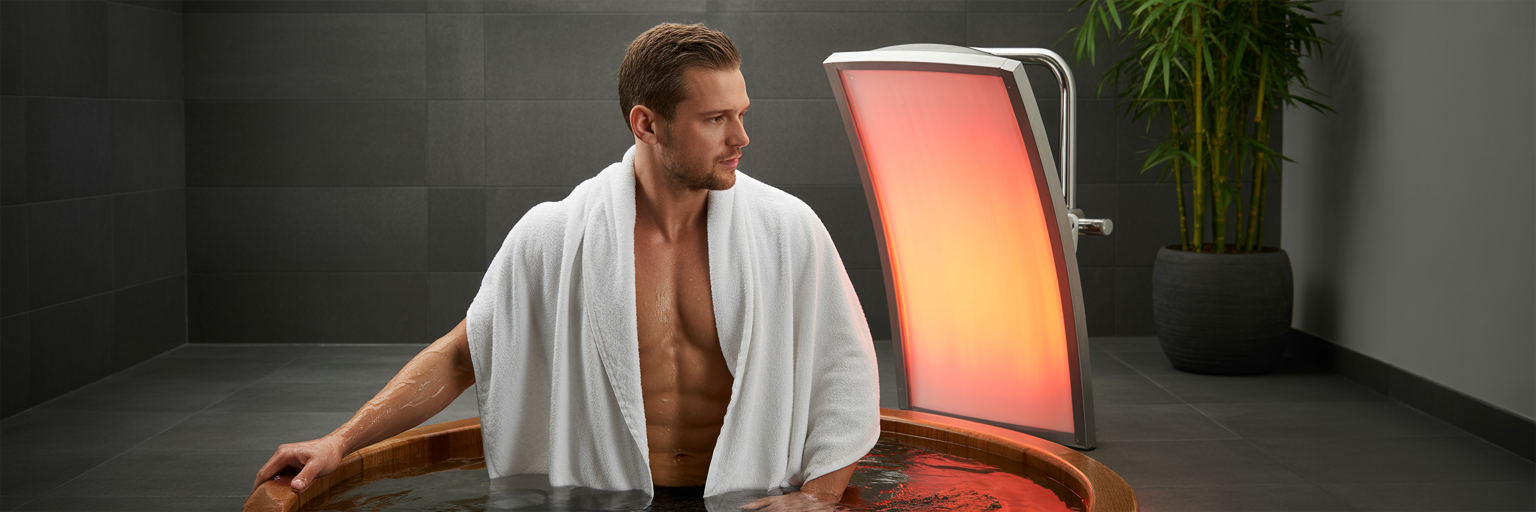
Translating this science into a practical, repeatable process is key to unlocking its benefits. Building an effective at-home recovery routine around these two modalities does not need to be complicated. By following a clear, step-by-step guide, you can ensure you are getting the most out of each session. The focus should be on consistency and listening to your body's feedback.
Here is a simple protocol to follow:
- The Cold Plunge: Begin with a cold plunge lasting between three to five minutes. A temperature range of 10–15°C (50–59°F) is widely considered the sweet spot for triggering the desired hormetic response without placing excessive stress on the body. This duration is sufficient to initiate the vasoconstriction and norepinephrine release that are central to the therapy's benefits.
- The Transition Period: After exiting the cold plunge, allow for a transition period of 10 to 15 minutes before starting your red light therapy session. This waiting time is important. It allows your body's initial, intense shivering response to subside and the natural rewarming process to begin. As your blood vessels start to dilate, your tissues become more receptive to the light energy.
- The Red Light Session: Position yourself for a 10 to 20-minute red light therapy session. For full-body benefits, aim to be about 6 to 12 inches away from the panel, as this distance ensures optimal light absorption without being too close. Target the major muscle groups you worked or any areas experiencing particular soreness.
It is important to emphasize consistency over intensity. Aim for two to four of these combined sessions per week to achieve sustained benefits. The misconception that "more is always better" can lead to over-stressing the system. This is a powerful combination of stressors, and your body needs adequate rest to adapt and recover. Pay close attention to your energy levels and muscle soreness, and do not hesitate to adjust the frequency or intensity based on how you feel. For more ideas on how to refine your wellness strategies, you can find additional insights on our blog.
Integrating Advanced Recovery into Your Routine
Layering cold plunge and red light therapy is a deliberate, intelligent strategy that moves beyond simply treating symptoms like soreness. It is an approach that supports the body's fundamental systems of repair and energy production. By using cold to manage inflammation and flush tissues, followed by light to energize cellular repair, you create a comprehensive recovery effect that is greater than the sum of its parts. This method acknowledges that true recovery is an active process, not a passive one.
The increasing accessibility of modern systems has made integrating these advanced modalities into your daily life more feasible than ever. Creating a dedicated at-home recovery space is no longer an out-of-reach luxury. With options ranging from simple yet effective Ice Blankets to precise, temperature-controlled cold plunges and powerful LED panels, you can build a setup that fits your space and wellness goals. This shift puts you in control of your recovery, allowing for consistent application that is essential for long-term results.
Ultimately, adopting a synergistic approach like this is an investment in your long-term health, resilience, and performance. It is about providing your body with the tools it needs to function at its best. As you consider how these therapies might fit into your personal routine, we encourage you to explore the options available for building your ideal recovery setup. If you are ready to take the next step in optimizing your wellness, our Start Here page is a great resource to guide you on your journey.