The practice of using heat for health is as old as civilization itself, from Roman baths to Finnish sweat lodges. Today, that ancient wisdom is accessible in our homes, presenting a modern choice between the enveloping warmth of a traditional sauna and the targeted heat of an infrared blanket. This decision brings up the central question of Infrared Sauna Blankets vs Traditional Saunas and which approach best serves your personal recovery needs. This is not a simple matter of which is superior, but rather a personal assessment based on your specific physiological goals, lifestyle, and practical constraints. Both technologies share a common purpose: to use heat to trigger powerful adaptive responses in the body, delivering a wide range of at home sauna benefits from accelerated muscle recovery to reduced inflammation.
The most effective recovery tool is always the one you use consistently. Therefore, understanding how each system works, what it achieves, and how it fits into your daily life is essential for making a sustainable choice. This guide is designed to move beyond surface-level comparisons and provide a clear framework for your decision. We will examine the fundamental differences in how heat is delivered to your body, connect those mechanisms to distinct health outcomes, and address the real-world factors of cost and convenience. By exploring these dimensions, you can gain the clarity needed to select a system that truly integrates into your routine, because consistency is the ultimate driver of long-term results. As you consider these options, you may find it helpful to explore the broader landscape of recovery technologies discussed on our blog.
The Fundamental Difference in Heat Delivery
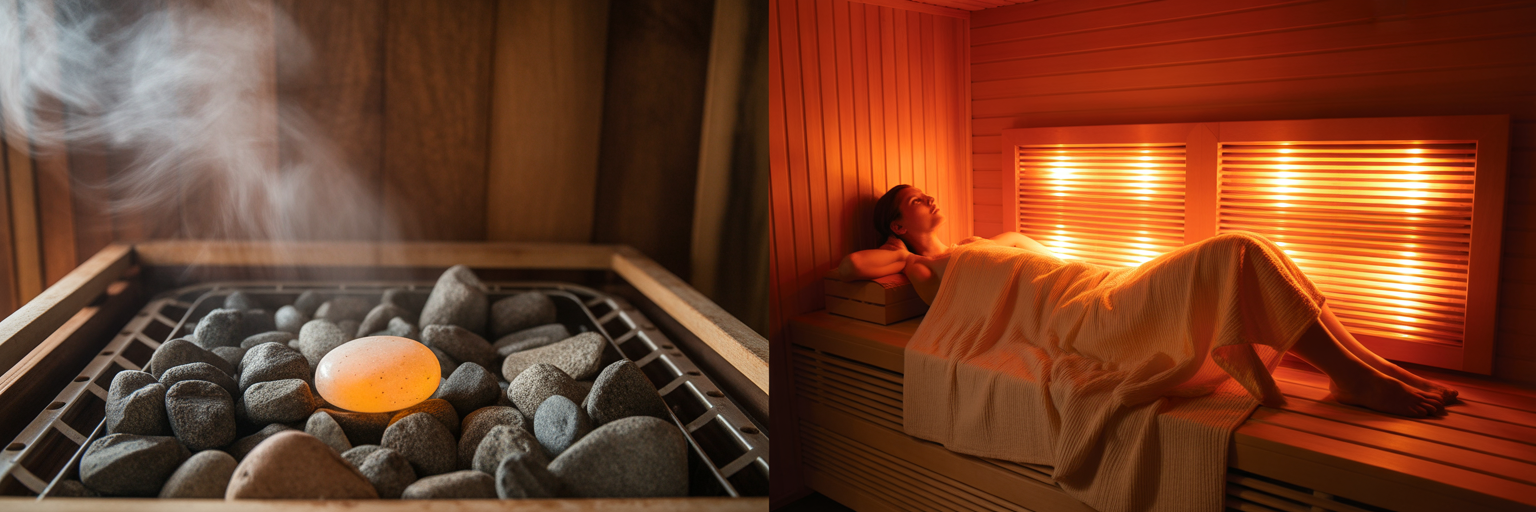
To understand which type of sauna is right for you, it is crucial to first grasp how they heat your body, as their mechanisms are fundamentally different. A traditional sauna, whether heated by wood or an electric stove, operates on the principle of convection. The heater warms a collection of rocks to an extremely high temperature, and these rocks then heat the surrounding air. You are warmed by this superheated air, which typically reaches between 175 and 200 degrees Fahrenheit. The experience is one of intense, ambient heat that envelops your entire body from the outside in. It creates a powerful external thermal load, demanding a significant physiological response to maintain homeostasis.
Infrared sauna blankets, in contrast, use radiant heat. Instead of heating the air around you, they emit far-infrared wavelengths that penetrate the skin and warm your body’s tissues directly. This is similar to the way you feel the sun’s warmth on a cool day; the air temperature may be low, but the radiant energy warms you from within. Because of this direct heating method, infrared blankets operate at much lower and more tolerable temperatures, usually between 110 and 150 degrees Fahrenheit. The experience is less about enduring intense ambient heat and more about feeling a deep, penetrating warmth that radiates through your muscles and joints.
This distinction between convection and radiant heat is not just a technical detail. It is the primary reason why these two systems produce different physiological effects and feel so distinct. The high ambient temperature of a traditional sauna places a significant stress on the cardiovascular system and triggers a rapid, systemic response. The direct, deep-heating action of an infrared blanket allows for a more targeted thermal effect on tissues without requiring the same level of ambient intensity. This core mechanical difference is the foundation for all the specific recovery outcomes that each system is best suited to deliver.
Matching Sauna Type to Specific Recovery Outcomes
With a clear understanding of how each sauna delivers heat, you can now connect those mechanisms to your specific recovery goals. The intense, air-based heat of a traditional sauna excels at creating a strong systemic stress response, which is highly beneficial for certain outcomes. The most well-documented of these relates to traditional sauna cardiovascular health. Extensive long-term studies, particularly from Finland, have shown a strong correlation between frequent high-heat sauna use and significant reductions in cardiovascular mortality. This intense heat forces your heart to work harder to pump blood to the skin for cooling, effectively giving your cardiovascular system a workout. This process also triggers a robust release of heat shock proteins (HSPs), which are essential for cellular repair, protein stability, and building resilience against future stressors. For individuals seeking to maximize this adaptive stress for peak conditioning, a traditional sauna is an excellent tool.
Conversely, the deep, radiant heat of an infrared sauna offers a different set of advantages, particularly for restorative goals. Because it warms the body directly at lower ambient temperatures, it can promote a parasympathetic state, the body’s “rest and digest” mode. This makes it a powerful tool for managing chronic pain and reducing systemic inflammation. The penetrating warmth helps increase circulation to deep tissues, delivering oxygen and nutrients while flushing out metabolic waste. This targeted action is why many turn to an infrared sauna for inflammation relief. Furthermore, the gentle heating and promotion of a relaxed state can significantly improve sleep quality. The deep warmth can also be highly effective for sauna blanket for muscle recovery, as it helps release tension and soothe soreness without the intense systemic load of a traditional sauna. While both systems can be part of a contrast therapy routine, the extreme heat of a traditional sauna creates the greatest thermal differential for that purpose.
The choice between these systems often comes down to your primary objective. A traditional sauna is best for those prioritizing cardiovascular conditioning and maximizing the acute stress response for cellular resilience. An infrared sauna is often better suited for deep tissue relaxation, targeted inflammation reduction, and promoting better sleep. As you weigh these benefits, it is also useful to see how different heat therapies compare to other modalities, such as those explored in our analysis of sauna blankets versus PEMF mats for pain and inflammation.
Practical Realities: Cost, Space, and Maintenance
Beyond the physiological benefits, the practical realities of ownership often become the deciding factor. A traditional sauna represents a significant commitment in terms of finances, space, and installation. The upfront cost for a quality at-home unit typically starts around $3,500 and can easily exceed $10,000, depending on size and features. This investment is coupled with the need for a dedicated, permanent space in your home or yard. Installation is another major consideration, as most traditional saunas require a 240-volt circuit, which usually necessitates hiring a professional electrician. This is not a portable solution; it is a permanent home fixture.
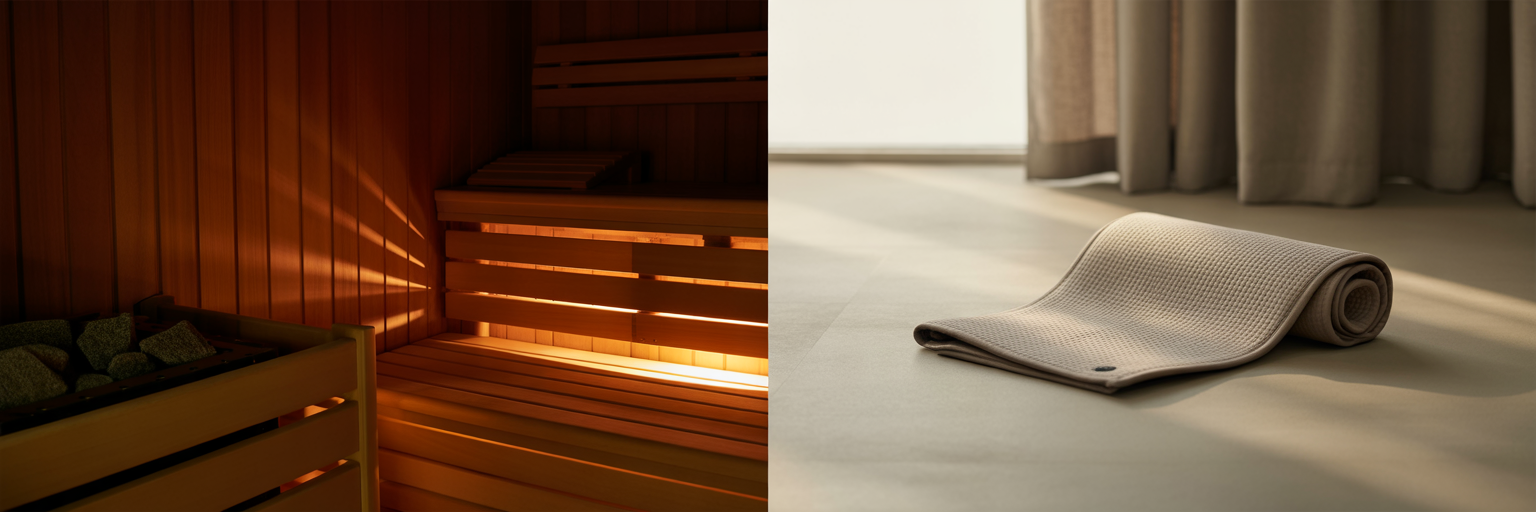
Infrared sauna blankets stand in sharp contrast to this, offering a far more accessible entry point into heat therapy. Their upfront cost is substantially lower, with quality models generally ranging from $400 to $800. This makes them an attainable option for a much wider audience. Perhaps their greatest advantage is their "plug-and-play" nature. They require no special installation and can be plugged into any standard wall outlet. In terms of space, an infrared blanket takes up no more room than a yoga mat when in use. When you are finished, it can be wiped down, rolled up, and stored in a closet or under a bed. This portability makes it an ideal solution for those living in apartments, smaller homes, or for anyone who wants the flexibility to take their recovery tool with them when traveling. You can explore a variety of these convenient options in our collection of infrared sauna blankets.
The differences extend to daily use and maintenance. A traditional sauna requires regular cleaning of the wood and heater components to maintain hygiene and functionality. An infrared blanket, on the other hand, simply needs to be wiped clean after each session. These practical considerations are not minor details. They directly influence how often you will use your sauna. A tool that is expensive, difficult to install, and requires a dedicated space may end up being used less frequently than one that is affordable, convenient, and easy to store. Ultimately, the best recovery system is rendered useless if it is too impractical to integrate into your regular routine.
Making an Informed Decision for Your Lifestyle

Synthesizing these points provides a clear path to making your decision. The right choice depends on an honest assessment of your priorities and circumstances. The first step is to ask yourself: what is my primary recovery goal? If your aim is peak cardiovascular conditioning and you want to leverage intense heat to build systemic resilience, a traditional sauna aligns well with those objectives. The powerful heat shock protein response and cardiovascular workout it provides are unmatched for that purpose. However, if your focus is on daily pain management, reducing chronic inflammation, improving sleep, and achieving deep muscle relaxation, the targeted, gentle heat of an infrared sauna blanket is likely a better fit.
The next step is to consider your practical limitations. What is your budget? Do you have a dedicated, permanent space for a large fixture, or do you need a solution that can be stored away? Are you prepared for a professional installation, or do you need something you can use out of the box? For an athlete with a home gym and a budget for a permanent installation, a traditional sauna can be a powerful addition. For a city-dweller in an apartment seeking a convenient and affordable way to manage daily aches and promote relaxation, an infrared sauna blanket is the more logical and sustainable choice.
Remember, the physiological benefits of heat therapy are cumulative. They build over time with consistent use. Therefore, the most important factor is choosing the system you will realistically use several times a week. A less-than-perfect tool used consistently will always deliver better results than a perfect tool used sporadically. Understanding these fundamental differences is the first step. The next is to explore high-quality options that align with your goals and lifestyle, such as the well-regarded HigherDose Infrared Sauna Blanket, ensuring your investment in recovery pays dividends for years to come.