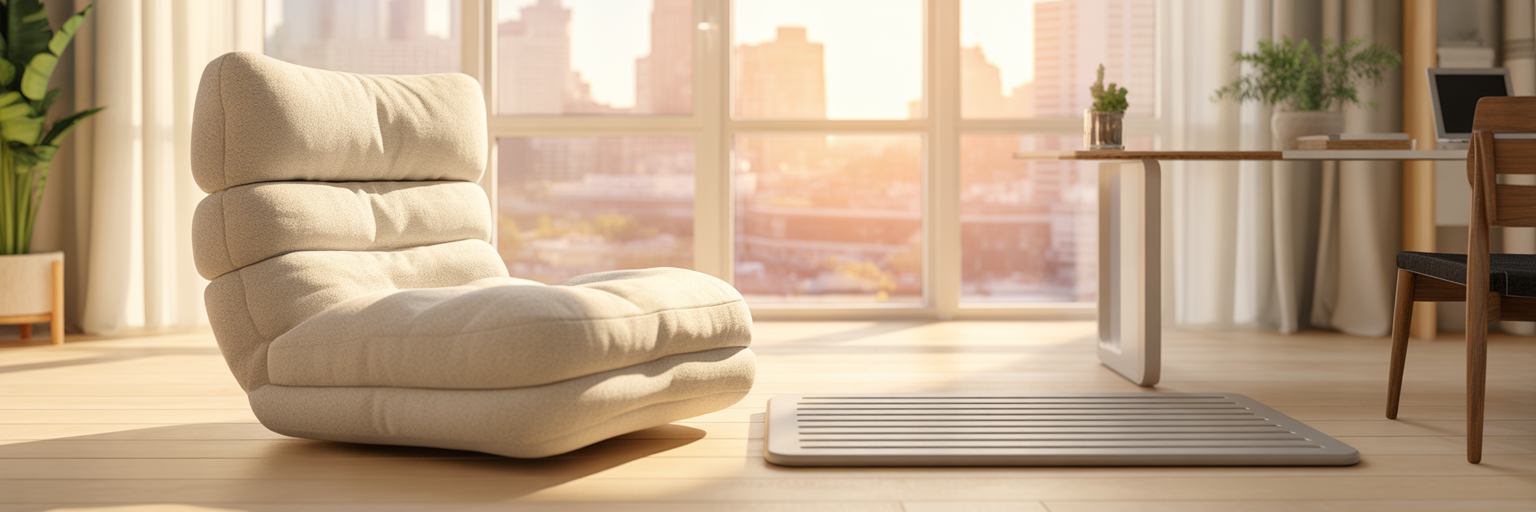
The eight-hour workday was designed for an industrial era of physical labor, yet we apply it to a digital world where the primary tool is a chair. This fundamental mismatch creates a unique physiological burden that demands an equally modern response.
Understanding Sedentary Stress and Passive Recovery Tools
For millions of professionals, the workday is defined by prolonged periods of sitting. This creates a condition that goes far beyond simple tiredness, often referred to as sedentary stress. It is not the acute fatigue you feel after a workout, but a cumulative physiological debt built from hours of postural compromise. This debt manifests in specific, tangible ways: a persistent tension that settles in the neck and shoulders, a deep stiffness in the hips and lower back, and a noticeable metabolic slowdown that can leave you feeling sluggish and unfocused. The body, designed for movement, is held in a static position, causing muscles to lock into shortened or overstretched states and circulation to become less efficient.
Many well-intentioned solutions have emerged to address this. Standing desks, ergonomic chairs, and hourly movement breaks are certainly beneficial. They interrupt the static cycle and encourage better posture. However, they often fail to fully resolve the problem. These active interventions can feel like trying to pay off a significant debt with pocket change. They chip away at the surface but do not undo the deep-seated strain that accumulates over eight or more hours. The question of how to reduce sedentary stress effectively requires a more comprehensive answer. While moving more is part of the solution, you also need a strategy to help your body actively repair the strain it endures daily.
This is where passive recovery comes in. These technologies are not luxuries but essential tools for the modern professional. They are designed to support your body’s natural repair processes without requiring more of your limited time or active effort. By creating the right conditions for recovery, they help your system manage inflammation, release deep-seated tension, and restore cellular function. Instead of just mitigating the damage, these proactive strategies help your body heal from it. For those new to this approach, understanding the fundamentals of passive recovery can provide a clear path forward.
Red Light Therapy for Energy and Postural Relief
One of the most targeted approaches for combating the effects of a desk-bound job is red light therapy, also known as photobiomodulation. The concept can be understood through a simple analogy: it acts as a cellular charger. Just as a phone needs electricity to function, your cells need energy. This therapy uses specific, non-invasive wavelengths of light, particularly red (around 660nm) and near-infrared (around 850nm), that penetrate the skin and are absorbed by the mitochondria within your cells. This process stimulates the production of adenosine triphosphate (ATP), the primary energy currency of the body. With more ATP available, cells have the fuel they need to repair tissue, reduce inflammation, and function optimally.
This cellular boost has direct applications for the desk worker. First, a morning session can help regulate your circadian rhythm, which is often disrupted by prolonged exposure to blue light from screens. By providing a dose of healthy light early in the day, you can support a more natural energy cycle. Second, it can be used to target the specific aches that result from poor posture. Applying red light therapy for posture-related strain in the evening can help soothe a stiff neck, release tension in the trapezius muscles, and ease a tight lower back. The increased cellular energy helps your muscles recover from the static load they’ve endured all day.
For effective results, consistency is more important than duration. A daily session of 10 to 20 minutes is typically recommended. The key is to have direct skin exposure, positioning yourself about 6 to 12 inches from the panel to ensure the light can penetrate effectively. The quality of the device is also crucial, as its efficacy depends on delivering the correct wavelengths at a sufficient power density. Exploring panels from a reputable provider, such as those offered by Mito Health, ensures you receive a therapeutic dose. As you consider your options, browsing a curated selection of high-quality red light therapy panels can help you identify a device that fits your space and needs.
Infrared Sauna Blankets for Deep Thermal Release
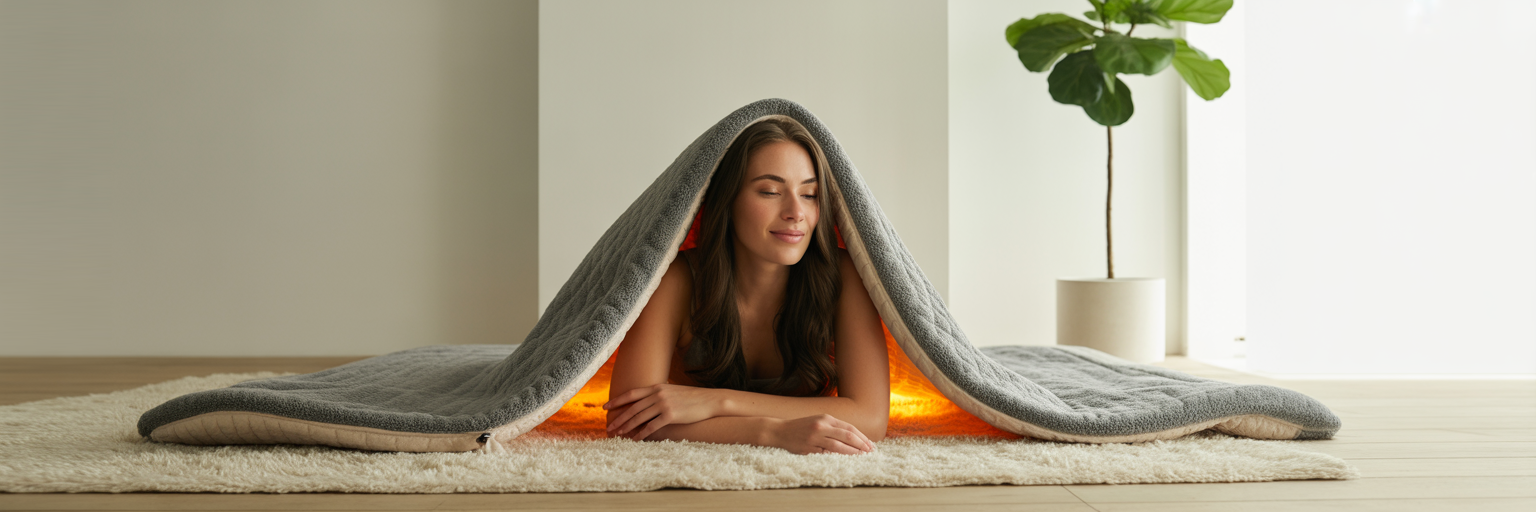
While red light therapy targets cellular function, an infrared sauna blanket addresses sedentary stress from a different angle: deep, therapeutic heat. Unlike a traditional sauna that heats the air around you, an infrared blanket uses far-infrared rays to gently raise your body's core temperature directly. This creates a passive cardiovascular effect, increasing your heart rate and circulation in a way that mimics a light workout. For someone who spends most of their day sitting, this boost in blood flow is incredibly valuable. It helps deliver more oxygen and nutrients to tissues throughout the body, particularly to areas that have become stiff and stagnant.
The infrared sauna blanket benefits extend directly to the problems caused by a desk job. The induced heat helps your body manage cortisol, the primary stress hormone, which can become chronically elevated from work pressures and physical inactivity. This deep thermal therapy promotes a profound sense of relaxation, helping to melt away the physical and mental tension accumulated during the workday. Furthermore, by inducing a healthy sweat, the blanket supports the body's natural detoxification pathways, a process that can become sluggish with a sedentary lifestyle. The result is a feeling of being physically cleansed and mentally reset.
One of the greatest advantages of an infrared sauna blanket is its accessibility. Getting to a traditional sauna can be a significant time commitment, but a blanket can be used on your bed or couch. This convenience makes it far easier to integrate into a busy schedule. A frequency of three to four times per week for 25 to 45 minutes is often enough to experience significant benefits. It is important to hydrate well before and after each session and to allow for a quick cleanup. For many, the ease of use of a product like the HigherDose Infrared Sauna Blanket makes this powerful therapy a sustainable part of their weekly routine, offering a practical way to achieve deep thermal release at home.
PEMF Mats for Effortless Daily Restoration
Among the available passive recovery technologies, Pulsed Electromagnetic Field (PEMF) therapy stands out as perhaps the most effortlessly integrated tool for the desk worker. It requires no heat, no light, and no need to undress. PEMF therapy uses gentle, pulsed magnetic fields that are tuned to specific frequencies to support your body’s natural recovery processes. In simple terms, these fields interact with your cells to help optimize their function, reduce inflammation, and induce a state of deep systemic relaxation. It is one of the truest forms of passive recovery tools, as it works on your body while you simply lie or sit on the mat.
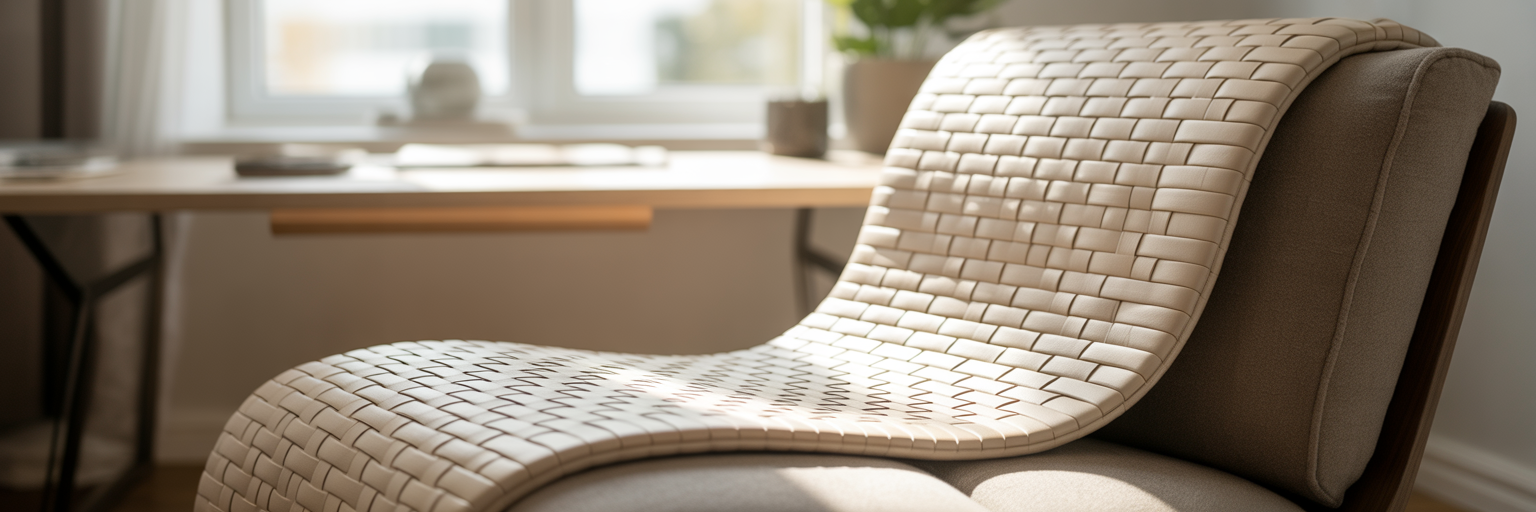
The primary advantage for a professional is its seamless integration into the day. A key differentiator is the ability to use a PEMF mat for office chair support during the workday. By placing the mat on your chair, you can counteract the buildup of postural strain in real time, helping to keep your muscles relaxed and circulation flowing without ever leaving your desk. This makes it a proactive tool, not just a reactive one. The application of different frequencies allows you to tailor the experience to your needs:
- Higher frequencies (e.g., 15–30 Hz) tend to have a more energizing effect. A session in the morning or during a midday slump can help you feel more alert and focused without relying on caffeine.
- Lower frequencies (e.g., 1–8 Hz), which mimic the brain’s natural theta and delta waves, are ideal for evening use. A session on the couch can help you unwind from the day, release tension, and prepare your body for restorative sleep.
Because of its minimal setup and cleanup, PEMF therapy removes the common barriers that prevent people from sticking to a recovery routine. It can become a foundational daily habit for managing the chronic tension that defines a desk-bound career. For those curious about the science behind it, learning more about what PEMF therapy is can clarify how these invisible fields produce such tangible results.
Building Your Personal Recovery Routine
Understanding these individual tools is the first step. The next is to build a holistic strategy that addresses your body’s needs throughout the day. This is where the concept of "stacking" comes in. Stacking involves combining different therapies to create a synergistic effect. For example, you might use an energizing therapy in the morning to prepare for the day and a relaxing one in the evening to unwind. This approach allows you to create a comprehensive routine that targets different aspects of sedentary stress, from low energy to physical tension.
To make this concept more concrete, here is a sample schedule illustrating how you could stack these tools throughout a typical work week. This is just a template; the ideal routine is one that you can stick to consistently.
| Time of Day | Recovery Tool | Duration & Frequency | Primary Goal |
|---|---|---|---|
| Morning (Daily) | Red Light Therapy Panel | 10-15 minutes | Boost cellular energy & support circadian rhythm |
| Afternoon (Daily) | PEMF Mat on Chair | 20-30 minutes | Combat postural stiffness & maintain energy |
| Evening (3-4x/Week) | Infrared Sauna Blanket | 30-45 minutes | Deep stress release & promote detoxification |
| Evening (Alternate Days) | PEMF Mat on Couch | 30-40 minutes (low frequency) | Promote relaxation & prepare for sleep |
The core principle to remember is that consistency is more important than intensity. Managing chronic sedentary stress is a long-term game. A few key takeaways can help guide your approach:
- Regular, shorter sessions are often more effective than infrequent, long ones for managing daily strain.
- These tools complement, not replace, foundational health habits. They work best when combined with a healthy diet and good sleep hygiene.
- Active recovery remains essential. Movement breaks, stretching, and proper hydration are still non-negotiable parts of a healthy workday.
Ultimately, the goal is to build a sustainable set of at-home recovery systems that fit your unique lifestyle. As you decide which tools to prioritize, comparing their specific benefits, such as in a sauna blanket versus PEMF mat analysis, can help you make an informed choice.
Proactive Recovery in a Sedentary World
The structure of modern work has created a physical imbalance, leaving many professionals with a physiological debt that cannot be ignored. Waiting for the weekend to recover is no longer a viable strategy. A proactive, modern approach is needed to manage the daily toll of a desk-bound career. Passive recovery technologies offer an effective and accessible way to provide your body with the support it needs to repair, relax, and restore itself on a consistent basis.
The "best" tool is not a universal answer. It is entirely personal and depends on your specific pain points, your daily schedule, and, most importantly, what you will use consistently. The goal is not to accumulate a collection of devices, but to find the one or two systems that integrate most seamlessly into your life. For one person, that might be a quick red light session in the morning. For another, it might be using a PEMF mat while answering emails. Take stock of your own daily stressors and consider which type of recovery system could best support your long-term health. This is not an expense, but a strategic investment in your professional longevity and overall quality of life. To continue exploring these solutions, you can find more insights and articles on our main blog.