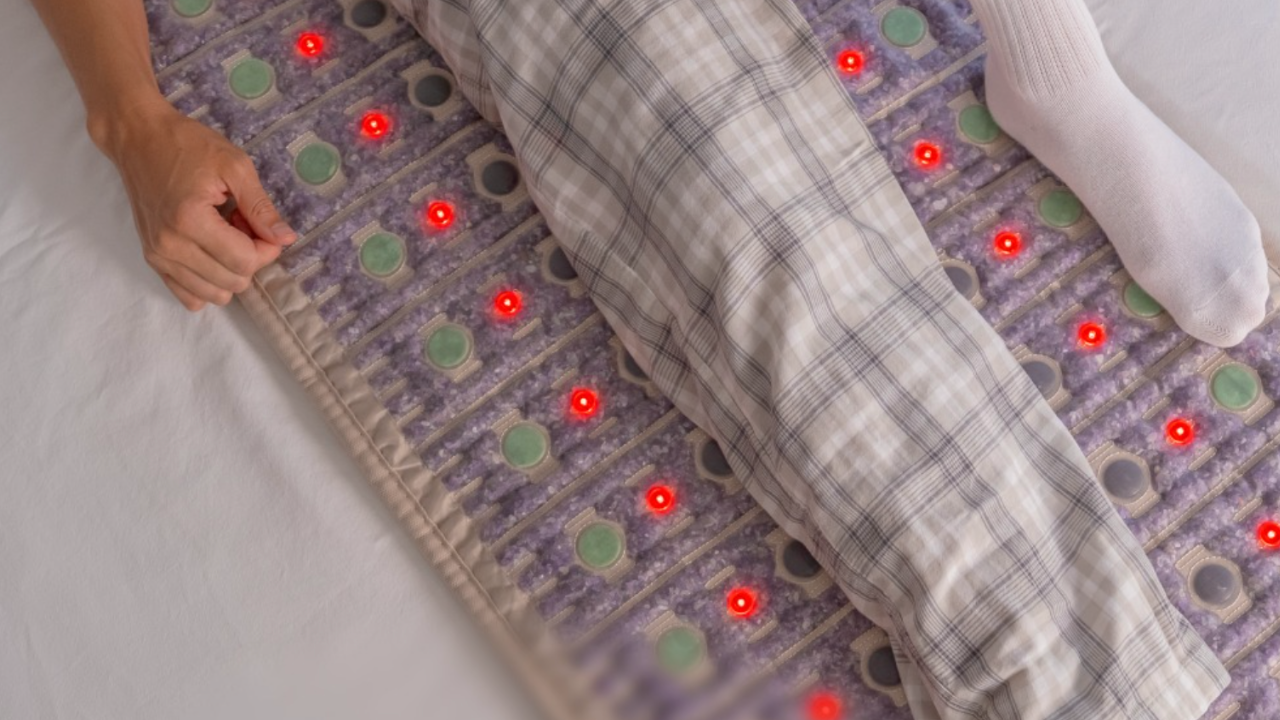
PEMF is one of those things people come across without fully understanding what they’re looking at.
It often gets grouped under “EMF,” which already carries a lot of confusion, and then described as a therapy where nothing obvious seems to happen. There’s no heat, no physical effort, no visible output. You lie on a mat, sit on it, or place it under part of your body, and the experience feels almost uneventful.
That’s usually where the skepticism starts. If nothing is happening on the surface, it’s hard to understand what it’s actually doing or why people use it consistently at home.
The difference between EMF and PEMF
The confusion begins with the term itself.
EMF stands for electromagnetic fields. These are present everywhere in modern environments, coming from devices, wiring, and wireless signals. Most of the time, when people talk about EMF, they’re referring to background exposure that isn’t intentional.
PEMF stands for pulsed electromagnetic fields. The difference is that PEMF systems generate controlled, low-frequency pulses designed for specific use rather than passive exposure.
Instead of constant background signals, PEMF uses targeted pulses that interact with the body in a more structured way. The goal isn’t to overwhelm the system, but to introduce a controlled signal that the body can respond to over time.
That distinction matters, because PEMF isn’t just “more EMF.” It’s a different type of interaction entirely.
Why it feels like nothing is happening
One of the defining characteristics of PEMF therapy is how little it demands during use.
There’s no physical sensation that clearly signals activity. Some systems produce a faint pulsing feeling, but many don’t. Most sessions feel like resting.
That lack of sensation can make it feel ineffective at first, especially compared to something like a cold plunge or sauna blanket where the experience is immediate and obvious.
But PEMF isn’t designed to create a noticeable event. It works at a level that doesn’t produce strong sensory feedback, which is why the results tend to show up over time rather than during a session.
What people actually use it for
In a home setting, PEMF mats are typically used for recovery, relaxation, and support around ongoing physical discomfort.
People use them while lying down, reading, working, or resting. Sessions don’t interrupt anything else. They’re layered into time that would already be spent sitting or lying still.
This is part of what makes PEMF different from more active recovery tools. It doesn’t require a dedicated block of effort. It can run in the background while something else is happening.
That’s why it often becomes a longer-duration system compared to red light therapy or cold exposure. Instead of short, defined sessions, it can be used for extended periods without needing attention.
Why it is considered passive recovery
PEMF sits firmly in the passive category because it removes almost all barriers to use.
There’s no preparation. No physical resistance. No discomfort to push through. Once the mat is in place, the only requirement is time.
That changes how it fits into a routine. Instead of needing to carve out space in the day, it can be layered into time that already exists.
You don’t need to decide to “do” PEMF in the same way you decide to step into a cold plunge or set up a workout. You simply use it while resting.
This is what makes it one of the easiest systems to maintain over time, even though it’s also one of the least obvious during use.
How it compares to other recovery systems
Compared to other home recovery tools, PEMF is at the far end of the passive spectrum.
Cold plunge is highly active. It demands effort, tolerance, and a willingness to step into discomfort. Infrared sauna blankets create a strong physical experience through heat. Red light therapy sits somewhere in between, passive but still structured around short sessions.
PEMF removes even more interaction. It doesn’t create a strong physical experience, and it doesn’t require focused time in the same way.
That difference is why some people overlook it early on. It doesn’t feel like a “tool” in the traditional sense. But for people who value low-effort, repeatable recovery, that simplicity becomes the main advantage.
What determines whether it gets used
Like most home systems, PEMF use comes down to how easily it fits into daily life.
If the mat is already placed somewhere comfortable, it tends to get used without much thought. If it needs to be taken out, set up, and put away each time, usage drops quickly.
This is where larger, more structured mats from brands like HealthyLine often come into the picture. Not because they change how PEMF works, but because they are designed to stay in place and be used regularly without setup.
Over time, that difference in accessibility matters more than most technical specifications.
What people notice over time
PEMF doesn’t usually produce a strong, immediate effect that people can point to after a single session.
Instead, the changes tend to be gradual. People often describe feeling more relaxed, noticing less tension, or experiencing more consistent recovery over time.
Because the effects are subtle, they’re easy to dismiss early on. But when used regularly, they tend to become part of how the body feels day to day rather than something that stands out in a single moment.
PEMF therapy is easy to misunderstand because it doesn’t behave like most recovery tools.
It doesn’t push the body. It doesn’t create a visible reaction. It doesn’t ask for effort.
It simply sits in the background, supporting recovery while you’re already at rest.
For people building a home recovery setup, that difference is often what makes it useful. Not because it replaces more active systems, but because it fills the space where recovery can happen without requiring anything in return.
Looking at how PEMF mats fit alongside other systems, particularly those designed for consistent home use like HealthyLine, makes it easier to understand where they belong. Not as a standout moment in a routine, but as something that quietly supports everything around it.