
The modern desk job has created a unique physical burden, a form of quiet attrition known as sedentary stress. This is not a personal failing but an occupational reality born from prolonged, static posture. While active movement like a midday walk or periodic stretching is an essential first step, it often falls short of fully resolving the deep-seated tension, inflammation, and metabolic slowdown that accumulates over an eight-hour day. This gap highlights the need for a more complete strategy. This is where the concept of passive recovery for desk workers becomes so valuable. It involves using specialized technologies that help your body restore and repair itself without requiring active physical effort. Unlike active recovery such as foam rolling or yoga, these methods work on you while you rest, providing a complementary approach to wellness. This guide offers a practical framework that combines essential daily movement with targeted passive recovery, empowering you to effectively combat the physical toll of your profession.
The Physical Toll of a Desk Job
The consequences of a desk job extend far beyond a generic sore back. Prolonged sitting subjects your body to what is known as static loading. Muscles in your neck, shoulders, and upper back are held in a constant state of low-level contraction, deprived of the natural cycles of movement that flush out metabolic waste. This leads to stiffness, knots, and a persistent feeling of fatigue. Mechanically, your hip flexors shorten and tighten, pulling your pelvis forward and contributing to lower back pain, while your spinal discs endure steady compression. Your posture also directly impacts your physiology. Slouching compresses the diaphragm, promoting shallow breathing that can limit oxygen intake and subtly activate the body’s stress response. Over time, this sedentary pattern can have systemic effects, including reduced insulin sensitivity and a slower metabolism. This environment makes it easier to reduce inflammation from sitting a much more difficult task. Counteracting these cumulative daily stressors requires a consistent strategy. Just as a business secures its future with a sound long-term growth investment, your body needs a sustained commitment to preserve its health and function for years to come.
Movement as the Foundation of Recovery
Before exploring any technology, it is critical to establish that movement is the non-negotiable foundation of recovery. The objective is not intense exercise but the frequent interruption of static posture. An effective way to integrate this into your day is with a simple, three-tiered system that makes movement an automatic habit rather than another task on your to-do list.
1. Micro-Resets: These are simple, sub-60-second movements you can perform right at your desk. The goal is to do them frequently, perhaps every half hour. Think of gentle neck rotations to release tension, overhead arm reaches to lengthen your spine, or seated spinal twists to mobilize your upper back. These small actions prevent stiffness from setting in.
2. Movement Anchors: These are slightly longer breaks of two to five minutes, anchored to transitions in your workday. Use the time between meetings or after completing a major task to stand up and move. A brisk walk to the kitchen for water, a few trips up and down a flight of stairs, or a short sequence of dynamic stretches away from your desk can reset your posture and boost circulation.
3. End-of-Day Decompression: This is a crucial five to ten minute routine that creates a clear boundary between your work and personal life. Focus on movements that directly counteract the day’s posture. Hip-opening stretches like a pigeon pose help lengthen tight hip flexors, while gentle backbends like a cat-cow stretch decompress the spine. Establishing this foundation of movement makes all subsequent passive recovery efforts significantly more effective. Once this habit is in place, you can begin exploring other technologies to enhance your recovery, a topic we cover extensively on our blog.
Ergonomics: Your First Line of Defense
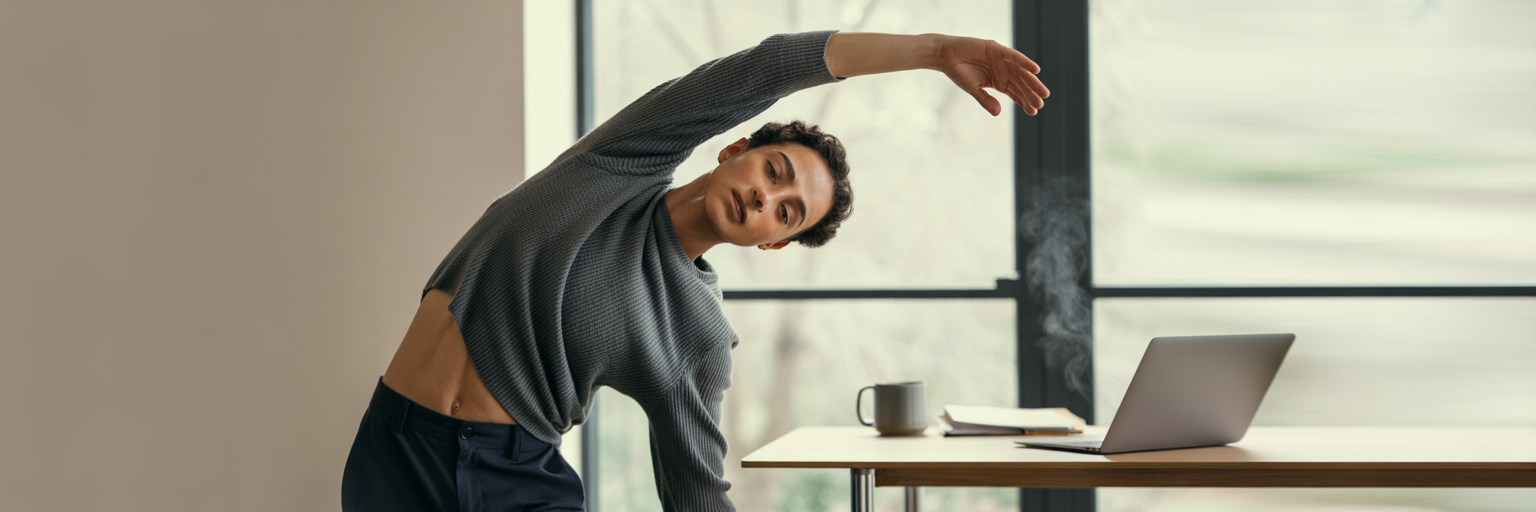
While movement interrupts sedentary patterns, ergonomics is about creating a workspace that minimizes physical strain from the start. A well-designed setup reduces the baseline stress on your body, making your recovery efforts more impactful. However, it is important to remember that even a perfect ergonomic environment does not replace the need for regular movement breaks. The goal is to create a less demanding physical starting point. Here are a few simple but effective ergonomic tips for remote work and office settings alike:
- Position the top of your monitor at or slightly below eye level to keep your neck in a neutral position.
- Ensure your feet are flat on the floor or supported by a footrest, which helps maintain a healthy posture in your lower back.
- Keep your elbows bent at approximately a 90-degree angle with your wrists straight, preventing strain on your arms and shoulders.
Standing desks can be a valuable tool, but a common misconception is that you should stand all day. Their primary benefit lies in facilitating easy transitions between sitting and standing, for instance, alternating every 30 to 45 minutes. Simply trading one static posture for another is not the solution. A supportive chair with proper lumbar support is also key, as it encourages the natural curve of your spine. Good ergonomics creates a less stressful physical environment, making the work of recovery much easier.
Amplifying Results with Passive Recovery Tools
With a foundation of movement and ergonomics in place, you can introduce passive recovery technologies to accelerate and deepen your results. These recovery tools for office workers are designed to address the specific symptoms of sedentary stress, providing powerful at-home recovery solutions. It is helpful to group them by their primary mechanism to understand what they do.
Heat and light therapies are excellent for addressing muscle stiffness and localized pain. An infrared sauna blanket, like those offered by brands such as Ice Blankets, envelops the body in deep-penetrating warmth, easing diffuse tension and promoting circulation. For more targeted issues, a red light therapy panel can be directed at specific problem areas like the lower back or neck. As research from companies like Mito Health highlights, this technology uses specific wavelengths of light to reduce localized inflammation and soreness.
Cold therapies offer a different but equally powerful benefit. For those looking to combat systemic inflammation and boost mental clarity, a cold plunge provides a potent, full-body reset. The brief exposure to cold water triggers a systemic anti-inflammatory response, which is highly effective for counteracting the chronic, low-grade inflammation associated with a sedentary lifestyle. Systems like the Plunge Chill make this practice accessible at home.
Finally, electromagnetic therapies work at a cellular level. Pulsed Electromagnetic Field (PEMF) therapy uses invisible fields to support the body's natural energy production and repair processes. A PEMF mat can help reduce persistent aches and general fatigue without any active effort, making it an ideal tool for busy professionals to use while resting.
| Tool | Primary Mechanism | Best For Addressing | Ideal Use Case |
|---|---|---|---|
| Infrared Sauna Blanket | Deep Penetrating Heat | Overall muscle stiffness, poor circulation, stress | End-of-day relaxation or a weekend reset session |
| Red Light Therapy Panel | Photobiomodulation (Light Energy) | Targeted joint pain, lower back soreness, neck stiffness | 10-15 minute sessions targeting a specific area during a break |
| Cold Plunge Tub | Cold-Induced Vasoconstriction | Systemic inflammation, mental fatigue, building resilience | A quick, invigorating session in the morning or post-workout |
| PEMF Mat | Pulsed Electromagnetic Fields | General fatigue, persistent aches, cellular repair | Lying on the mat for 20-30 minutes while resting or meditating |
Integrating Recovery Tech into Your Daily Routine
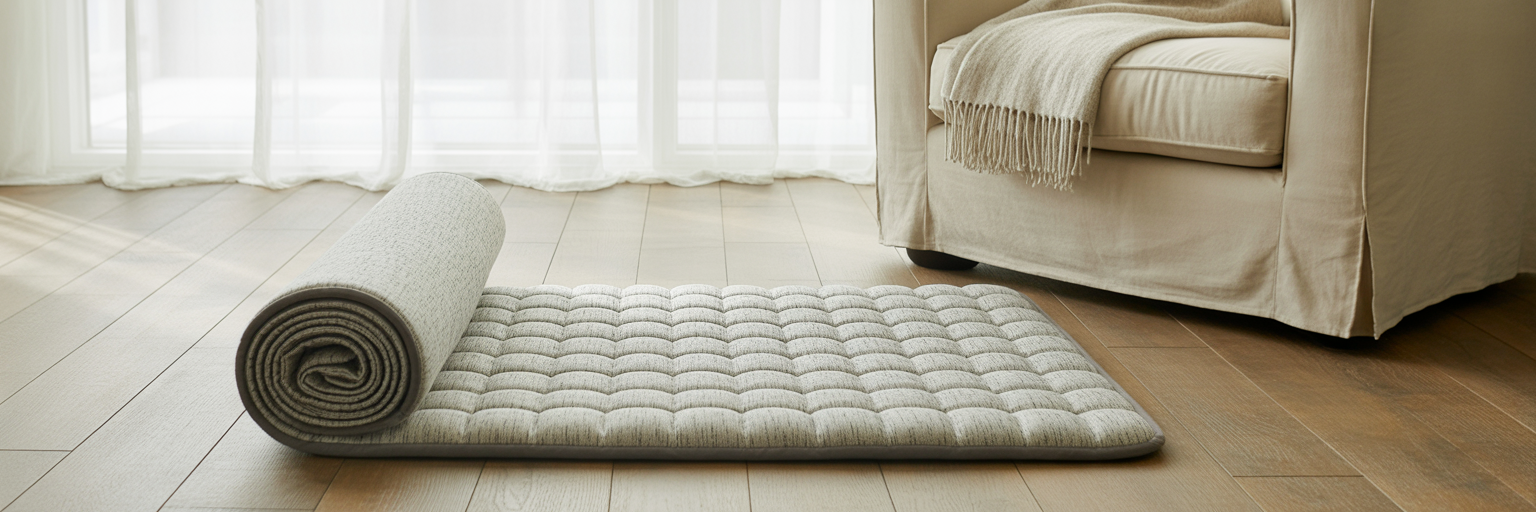
The most effective recovery tool is the one you use consistently. To make these practices a sustainable habit rather than another chore, try the technique of habit stacking. This involves pairing a new recovery session with an existing part of your daily routine. For example, you could use a red light therapy panel on your lower back for ten minutes while listening to your morning podcast. Or you could place a PEMF mat on your office chair for a 20-minute session while you clear out the last emails of the day. This approach removes the friction of having to "find time" for recovery.
Consider how different tools can serve you at different times. A brief, invigorating cold plunge in the morning can sharpen your focus for the day ahead, while a relaxing 30-minute session in an infrared sauna blanket in the evening can help you unwind and prepare for sleep. The key is to start small and prioritize consistency. Choose one tool that addresses your most pressing issue and commit to using it regularly for a few weeks. This allows the habit to stick and lets you clearly feel the benefits before you consider adding other technologies to your routine.
Long-Term Benefits of a Layered Approach
While the immediate relief from aches and pains is a welcome benefit, the true power of a consistent recovery practice lies in its cumulative advantages. This layered approach of movement, ergonomics, and technology does more than just fix today's problems; it builds physical and mental resilience against the chronic stressors of a desk-bound career. When your body feels better, your professional performance improves. You may notice sharper focus during complex tasks, more stable energy levels that carry you through the afternoon, and an improved overall mood.
This routine is also a powerful form of prevention. By actively managing inflammation, improving circulation, and releasing muscle tension each day, you are making a proactive investment in your long-term health. This significantly reduces the risk of developing more serious musculoskeletal issues down the road. The central theme is that consistency is far more powerful than intensity. A simple, 15-minute daily recovery ritual will yield far greater results than a sporadic, two-hour effort once a month. This sustained commitment is what truly helps you combat sedentary stress over the long term.
Designing Your Personal Recovery Plan

An effective plan to manage sedentary stress is personal and multi-layered. It begins with a non-negotiable foundation of frequent movement and sound ergonomics, which is then amplified by passive recovery technology tailored to your needs. To find your starting point, perform a simple self-assessment. What is your primary complaint? Is it diffuse muscle stiffness across your back and shoulders? Is it a sharp, localized pain in your neck or lower back? Or is it a general sense of fatigue and low energy? Your answer will help guide you toward the most appropriate tool.
It is crucial to note that if your pain is sharp, persistent, involves numbness, or radiates down your limbs, you should consult a medical professional. These strategies are designed for managing occupational wellness, not for self-diagnosing or treating medical conditions. The right tools can transform your relationship with your workday. To find the system that fits your specific needs, a great place to start is by exploring the different categories of recovery technology and taking ownership of your well-being.