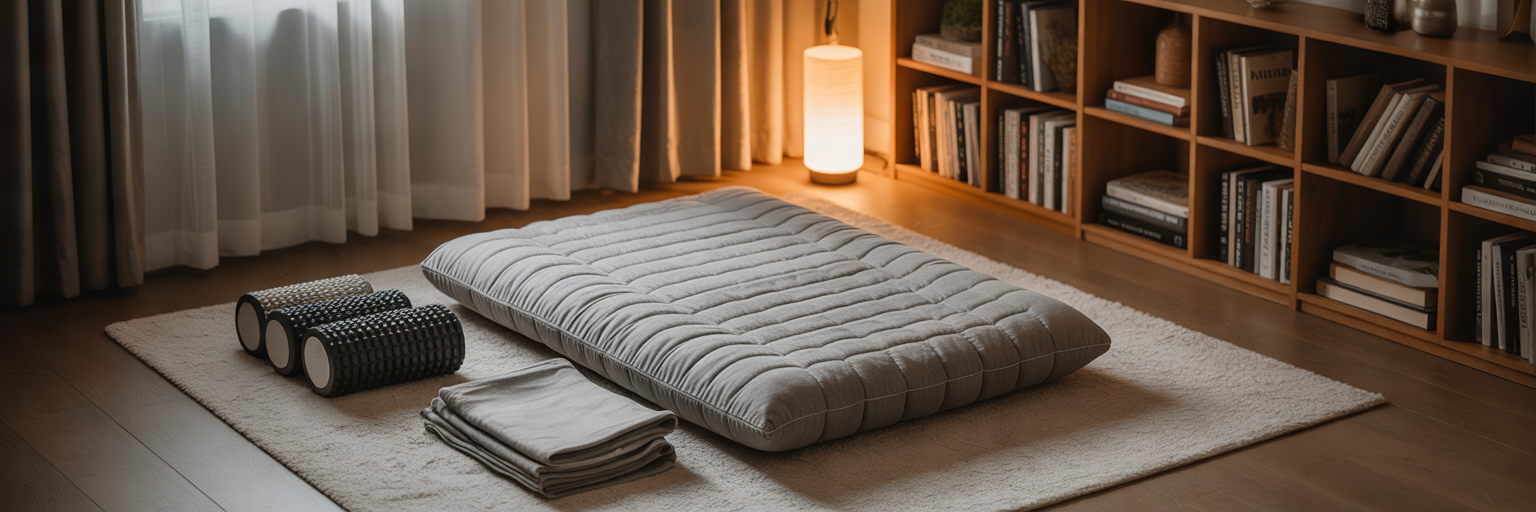
Physiological monitoring consistently shows that resting heart rates remain elevated for hours after physical exertion when the surrounding environment continues to trigger low-grade sensory stress. Establishing a dedicated passive recovery setup addresses this bottleneck by giving your autonomic nervous system a reliable, zero-friction cue to power down.
Why a Passive Recovery Setup Solves Lingering Daily Tension
You know the exact physical toll of a demanding Tuesday: heavy legs from a morning run, a stiff lower back from hours at a desk, and a persistent mental fog that lingers well into the evening. Most people respond to this exhaustion by collapsing onto a soft living room sofa in front of the television. Yet an hour later, you stand up feeling just as tight and restless as when you sat down. Soft upholstery allows your pelvis to tilt backward and your lumbar spine to sag, forcing deep postural muscles to maintain a subtle, protective contraction. Instead of resting, your body is quietly working to stabilize awkward joint angles while bright screens and household chatter keep your brain on high alert.
Beneath that lingering stiffness lies an unresolved neurological bottleneck. When you move directly from physical training or cognitive workplace pressure into a busy domestic space, your sympathetic nervous system remains locked in a low-grade defensive state. This heightened drive keeps baseline muscle tone elevated and constricts the tiny capillary beds responsible for flushing metabolic waste out of fatigued tissues. True physiological restoration requires shifting your internal balance toward parasympathetic dominance, the biological state where heart rate variability climbs, vascular walls relax, and cellular repair accelerates. Achieving that shift demands an environment that removes both mechanical strain and sensory clutter without asking you to expend extra physical energy.
Many well-intentioned buyers attempt to solve this tension by purchasing complex home recovery equipment Australia retailers promote online, only to leave the device sitting inside a hallway cupboard. When a piece of gear requires fifteen minutes of unpacking, untangling power cords, and clearing floor space before you can even lie down, your exhausted brain views the process as another chore. We hold a firm conviction that a permanent, frictionless corner built for two hundred dollars will always outperform a three-thousand-dollar machine gathering dust in storage. Before investing significant capital into advanced systems, reviewing our beginner orientation guide helps clarify how simple daily habits dictate long-term equipment value. Removing the barrier between feeling tired and lying down on a supportive surface is what actually triggers your nervous system to release lingering tension.
Designing a Frictionless Footprint That Signals Your Nervous System to Downshift
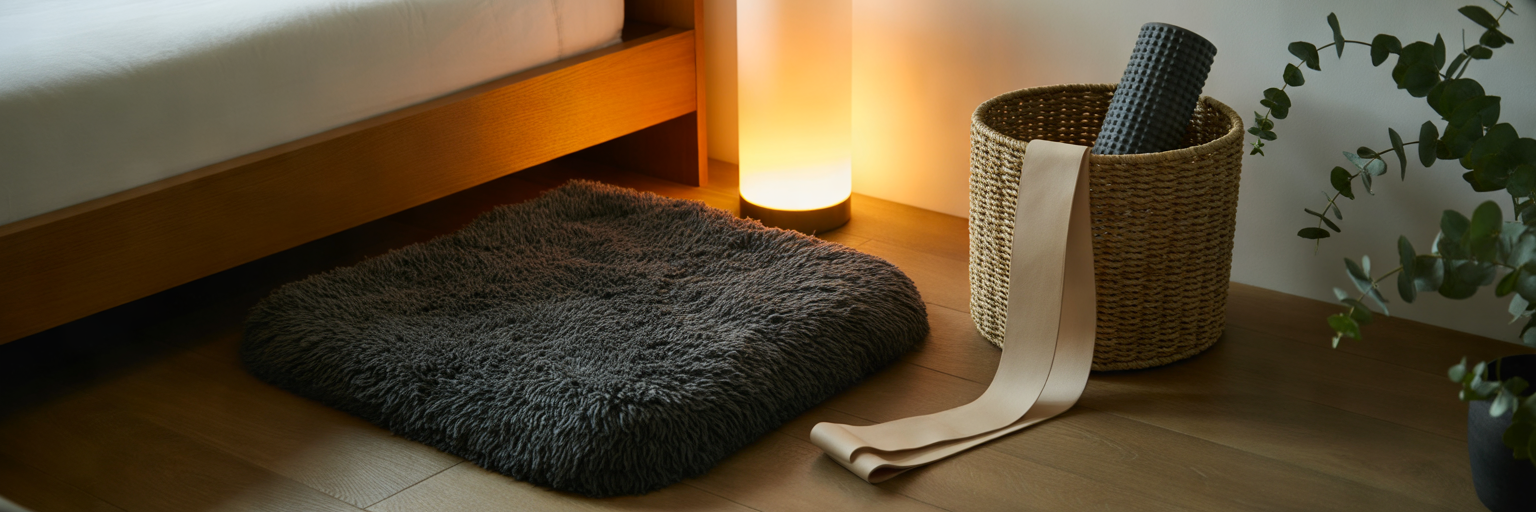
Building an effective budget recovery space at home starts with spatial psychology rather than expensive hardware. Your brain constantly scans your immediate surroundings for unfinished tasks and physical obstacles, translating visual disorder into subtle autonomic arousal. Claiming a dedicated two-metre footprint in a spare bedroom corner or quiet study nook changes that neurological response immediately.
Controlling Visual Clutter and Lighting
When you walk into a quiet zone where you never have to shift a coffee table or drag a dining chair out of the way first, the mental resistance to daily decompression vanishes. Your visual field should face a blank wall, a closed curtain, or a calm corner rather than a pile of laundry or an active computer monitor. Equally important is the spectral quality of the light hitting your retinas while you lie on the floor. Overhead white LEDs common in Australian homes emit intense blue wavelengths that trick your master circadian clock into assuming it is midday, suppressing evening melatonin and keeping cortisol elevated. Swapping harsh ceiling lights for a warm floor lamp or exploring specialized lighting mitigation options allows your optic nerve to signal safety to your hypothalamus. Pairing that dim illumination with subtle acoustic masking, such as a quiet bedroom fan or rain audio played from a speaker across the room, shields your auditory cortex from neighbourhood traffic without tempting you to scroll through a phone screen.
Storage Mechanics for Daily Consistency
Even the calmest corner fails if your foundational tools are buried behind winter coats in a built-in wardrobe. Human behaviour under fatigue follows the path of least effort, meaning out of sight quickly becomes out of mind. Keeping your mat unrolled or leaned directly against the wall alongside an open woven basket turns a fifteen-minute rest session into an automatic reflex. When your foam roller, thermal packs, and stretching strap remain visible and reachable from a lying position, you eliminate the micro-decisions that derail consistency five days a week. Establishing this reliable footprint comes down to three practical spatial rules: 1. Maintain permanent two-metre floor clearance so you never move furniture before resting, 2. Use warm indirect illumination under 2700K to prevent evening nervous system arousal, and 3. Keep all accessories in an open woven basket within arm's reach of the mat.
How Low-Cost Foundational Tools Influence Tissue Mechanics and Thermal Regulation
Once your spatial footprint is secure, allocating between $100 and $300 AUD toward basic mechanical and thermal tools transforms a bare floor into a functional physiological studio. Every item in an entry-level kit should serve a distinct biological mechanism, targeting either structural alignment, fascial hydration, or peripheral blood flow.
Spinal Decompression and Myofascial Release
Lying flat on a high-density fifteen-millimetre exercise mat provides firm proprioceptive feedback that neither a sagging mattress nor thin carpet can match. Against a supportive surface, your shoulder blades and sacrum settle onto an even plane, encouraging overworked paraspinal muscles to let go of their protective grip. Adding basic muscle recovery tools for home use allows you to address localized tissue restrictions through slow, passive weight shifting. Resting your calves or thoracic spine across a medium-density foam roller or a lacrosse-style trigger ball applies sustained mechanical shear to dehydrated fascia. Holding gentle pressure on a tender spot for ninety seconds stimulates specialized sensory receptors called Golgi tendon organs, which override local muscle spindles and command tight fibres to lengthen. A non-elastic stretching strap and light resistance bands extend this mechanical benefit by allowing you to elevate a leg and traction your hip capsule or hamstring without straining your neck and grip muscles.
Passive Thermal Contrast on a Budget
Mechanical decompression pairs naturally with targeted temperature shifts to influence local circulation and sensory nerve firing. Gently warming a stiff lower back with a microwavable wheat bag or low-voltage electric heating pad triggers local vasodilation, drawing oxygen-rich blood into ischemic muscle bellies while soothing pain receptors. Conversely, humid Australian summer evenings often leave core body temperatures elevated after late training, delaying sleep onset and keeping heart rates high. Applying reusable gel packs to major vascular junctions or draping specialized Ice Blankets over your body provides passive conductive cooling that calms cutaneous thermal receptors without requiring heavy plumbing or noisy compressors. It is important to distinguish this deep musculoskeletal and autonomic down-regulation from localized epidermal repair, such as when someone follows a strict clinical protocol for faster tattoo recovery on surface skin layers. Manual rollers and surface gel packs excel at altering superficial blood flow and sensory tone, though they cannot replicate the deep cellular penetration of powered systems. You can assemble this complete baseline kit using four accessible components:
- High-Density Floor Mat (15mm+): Establishes firm ground reaction support for neutral pelvic and spinal decompression.
- Medium-Density Foam Roller and Trigger Ball: Delivers sustained mechanical pressure to hydrate fascia and down-regulate local muscle tone.
- Non-Elastic Stretching Strap and Light Bands: Facilitates passive joint traction and limb elevation without upper-body grip fatigue.
- Reusable Thermal Gel Packs and Cooling Blankets: Modulates superficial vascular dilation and calms overheated skin receptors during rest.
| Foundational Component | Estimated Cost (AUD) | Primary Physiological Mechanism | Practical Limitation |
|---|---|---|---|
| High-Density Floor Mat (15mm+) | $60 to $110 | Provides firm proprioceptive feedback and neutral spinal alignment | Offers zero active thermal or electromagnetic stimulation |
| Foam Roller and Trigger Ball | $30 to $65 | Applies sustained mechanical shear to hydrate fascia and reduce muscle tone | Requires body weight shifting; less passive than motorized compression |
| Stretching Strap and Light Bands | $25 to $50 | Enables passive joint traction and reciprocal inhibition without grip strain | Depends on user positioning and consistent manual holding |
| Reusable Thermal Packs and Cooling Blankets | $40 to $120 | Shifts superficial blood flow and calms cutaneous thermal receptors | Penetrates only surface tissue layers compared to infrared or full immersion |
Pricing reflects standard retail averages across Australian fitness and pharmacy suppliers in 2026, illustrating how a complete mechanical and thermal baseline can be built for under $350 AUD before considering powered technology.
Bridging the Gap Between Entry-Level Habits and High-Value Recovery Systems
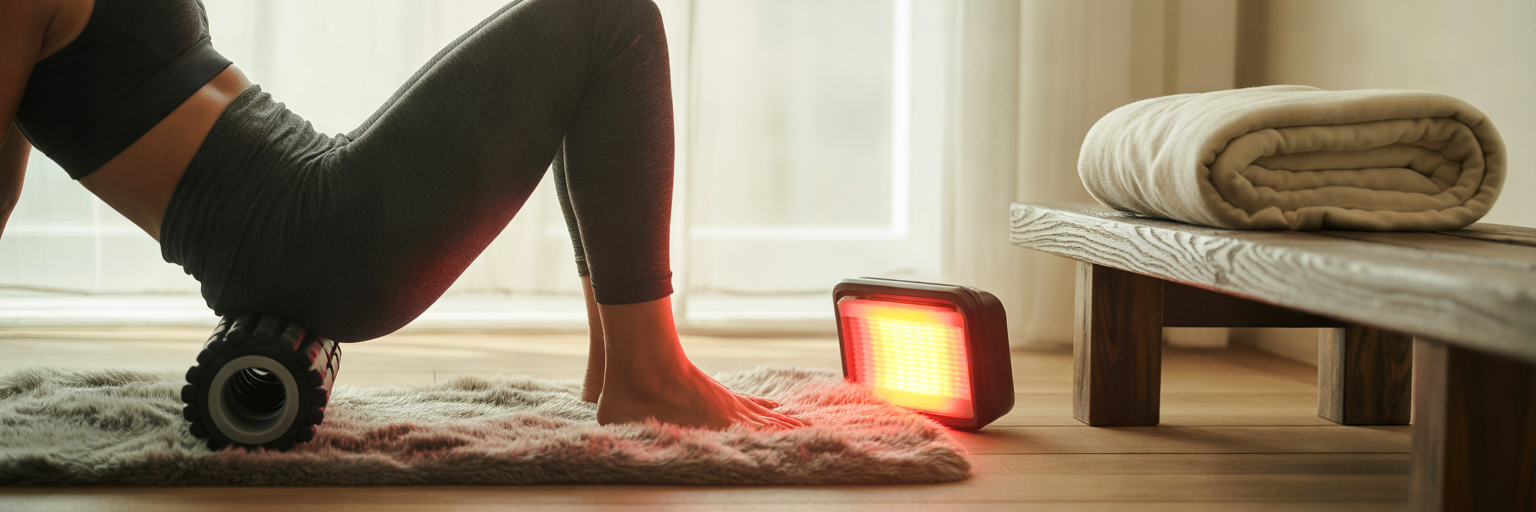
Spending six consecutive weeks using a two-hundred-dollar manual corner gives you something far more valuable than loose hamstrings: it proves you have the daily discipline to justify higher-tier investments. Many adults between forty and seventy find that while a foam roller and wheat bag resolve everyday postural tightness, deeper systemic fatigue, stubborn joint stiffness, or fragmented sleep still persist after heavy training blocks.
Evaluating When to Upgrade Your Footprint
When your fifteen-minute floor habit is firmly established, upgrading to dedicated home wellness technology becomes a calculated progression rather than an impulse gamble. Before spending between $500 and $5,000+ AUD on the best recovery equipment Australia offers, discerning buyers increasingly look beyond subjective soreness to verify what their physiology actually needs. Utilizing comprehensive blood biomarker services such as Mito Health allows you to track objective inflammatory markers, hormone profiles, and cardiovascular recovery metrics over time. Pairing hard physiological data with your daily log from your floor corner helps you separate genuine recovery deficits from aggressive wellness marketing claims.
How Core Recovery Technologies Behave in Real Life
Each of the four major powered recovery categories interacts with your established two-metre footprint and your biology in distinct ways. If your primary goal is deepening nervous system relaxation without lifting a finger, pulsed electromagnetic field systems lay directly atop your existing floor mat; reading our detailed breakdown on how PEMF therapy works explains how low-frequency electromagnetic pulses influence microvascular circulation and autonomic balance during effortless rest. For those seeking targeted cellular support for stubborn tendons or skin vitality, mounting a vertical panel in your corner introduces red light therapy at home, delivering specific red and near-infrared wavelengths to stimulate mitochondrial energy production without adding thermal stress. When systemic vascular conditioning or rapid autonomic resets are the priority, thermal powerhouses take over. Replacing a simple wheat bag with an infrared sauna blanket wraps your body in deep radiant heat that elevates core temperature and induces a vigorous sweat response, whereas stepping up from freezer gel packs to dedicated cold water systems like Plunge Chill delivers full-body hydrostatic pressure and acute vagus nerve stimulation. Because high-heat enclosures and icy tubs demand different spatial prep and cleaning routines, reviewing our analysis comparing a cold plunge vs infrared sauna blanket clarifies which thermal mechanism aligns with your household layout. Regardless of the category you select, always compare at least three competing models across verified irradiance or cooling power, local Australian warranty coverage, and ongoing electrical running costs.
| Technology Category | Typical Australian Price Range (AUD) | Biological Target | Spatial and Setup Reality |
|---|---|---|---|
| PEMF Therapy Mats | $600 to $3,500+ | Autonomic nervous system balance and microvascular circulation | Replaces or sits directly atop your existing floor mat; zero daily setup |
| Infrared Sauna Blankets | $500 to $1,200 | Core thermal elevation, sweat response, and peripheral vasodilation | Requires wiping down after use and ten minutes of pre-heating |
| Red Light Therapy Panels | $450 to $2,800+ | Mitochondrial ATP production and localized tissue recovery | Stands vertically against a wall or door; requires protective eyewear |
| Cold Plunge Systems | $1,200 to $6,000+ | Rapid vagus nerve stimulation and acute vascular constriction | Requires outdoor patio or wet-area drainage plus water filtration upkeep |
This comparison outlines how advanced systems integrate into an existing home recovery habit, highlighting spatial demands and price brackets across the Australian market.
Anchoring Daily Routines and Navigating Safety in Your Home Space
Even the most thoughtfully arranged corner requires a behavioural trigger to turn physical equipment into an automatic physiological ritual. Your autonomic nervous system thrives on predictable patterns, meaning you get a stronger relaxation response when you tie your fifteen-minute session to an existing daily transition. Stepping straight onto your mat the moment you unlace your running shoes, immediately after shutting down your work laptop at half-past five, or exactly thirty minutes before getting into bed removes willpower from the equation. Within a fortnight of repeating that sequence at the same hour, your heart rate begins to slow and your respiratory rate deepens the moment you dim the corner lamp and reach into your storage basket.
Maintaining a dedicated recovery zone in an Australian home also involves straightforward practical ownership and safety checks. Keep walkways around your mat completely clear of loose resistance bands or massage balls so family members or pets never trip in dim evening light. If your setup includes electric heating pads or you eventually introduce powered infrared or PEMF systems, inspect power cords regularly to ensure they are never pinched beneath heavy furniture or rolled tightly while warm. Any powered wellness equipment brought into your home should strictly match Australian electrical standards for 230V/50Hz operation and display the Regulatory Compliance Mark (RCM) to guarantee electrical safety and local consumer protection. Furthermore, always calibrate mechanical pressure and thermal intensity to your personal health history, taking extra care with intense heat, extreme cold, or deep tissue compression if you manage cardiovascular conditions, altered skin sensation, or acute joint inflammation.
Starting with a simple, well-planned corner allows you to observe how your muscles, sleep quality, and nervous system respond to consistent daily decompression without spending thousands of dollars upfront. Once your routine is second nature and you identify exactly where basic manual tools reach their limit, you can explore our independent equipment directories to compare specifications, ownership costs, and warranties across at least three suitable systems before expanding your home setup.