You know the feeling all too well. Your body is heavy with exhaustion, yet your mind is racing, replaying conversations and running through tomorrow’s to-do list. This state of being “wired but tired” is a frustratingly common experience, a physiological disconnect where the body craves rest but the brain refuses to power down. This isn't a personal failing. It is often the result of an overactive sympathetic nervous system, the body’s fight-or-flight mechanism, remaining engaged long after the day’s stressors are gone. To achieve deep, restorative sleep, your body needs to shift into its parasympathetic “rest-and-digest” state. Passive Recovery Systems are a category of at-home tools designed specifically to help you bridge this gap. These technologies work quietly to guide your nervous system toward relaxation, without requiring the active mental effort of meditation or breathwork. This article will explore the science behind how these systems facilitate better sleep and offer practical ways to integrate them into your nightly routine.
Understanding the Autonomic Nervous System's Role in Sleep
To understand why sleep can be so elusive, it helps to think of your autonomic nervous system (ANS) as having two primary controls: a gas pedal and a brake. The sympathetic nervous system is the gas pedal, accelerating your heart rate, heightening your senses, and preparing you for action. The parasympathetic nervous system is the brake, slowing everything down so your body can rest, digest, and repair. Modern life, with its constant notifications, late-night screen time, and even intense evening workouts, has a tendency to keep your foot pressed firmly on the gas. This sustained state of alertness, fueled by the stress hormone cortisol, creates a direct barrier to sleep. Your body simply cannot enter a state of rest while it’s still primed for a threat.
The transition to sleep is not a gradual coasting down. It requires a decisive shift to parasympathetic dominance, the moment the brake is firmly applied. This allows your heart rate to lower, your blood pressure to decrease, and your mind to achieve the calm necessary for sleep to begin. As a piece by Acheless notes, this "rest-and-digest" state is the calm system behind sleep. This is where passive recovery tools become so valuable. These interventions are engineered to provide specific external cues that stimulate the parasympathetic nervous system, a process known as autonomic nervous system regulation. They effectively send a signal to your body that the day is over and it is safe to power down and begin recovery. By exploring the different approaches to recovery, you can find more insights on our blog about how to support this crucial biological process.
Temperature Therapies for Pre-Sleep Relaxation
Modulating your body temperature is one of the most powerful ways to influence your nervous system and prepare for sleep. Both cold and heat therapies offer distinct pathways to relaxation, and the right choice depends on whether your primary obstacle to sleep is mental or physical.
Cold Therapy for a Parasympathetic Rebound
The idea of using a cold plunge before bed might seem counterintuitive, but its effect on the nervous system is profound. When you immerse yourself in cold water, your body has an immediate and intense sympathetic response. Your heart rate spikes, and your system goes on high alert. However, what happens next is the key to its sleep-promoting benefits. As your body adapts and begins to re-warm after you get out, it triggers a powerful parasympathetic rebound. This overcorrection floods your system with calming neurotransmitters, leaving you in a state of deep relaxation that can quiet a racing mind. For this to be effective, timing is important. A short immersion of one to three minutes in a cold plunge tub like the Plunge Chill, taken about 60 to 90 minutes before bedtime, gives your body enough time to re-warm and settle into this profoundly calm state.
Heat Therapy for Muscle Relaxation and Cooldown
For those whose sleep is disrupted by physical tension and muscle soreness, an infrared sauna for sleep offers a different but equally effective approach. Unlike traditional saunas that heat the air around you, infrared heat penetrates deep into your muscles, increasing circulation and helping to release stored tension. This process raises your core body temperature, and as you cool down afterward, your body mimics the natural drop in temperature that signals the brain to initiate sleep. This is one of the main reasons sauna blankets leave you so relaxed. To enhance this effect, you can use specialized cooling products, such as Ice Blankets, to create an ideal sleep environment that supports the body’s natural cooldown process. A 30-minute session in an infrared sauna blanket an hour before bed can dissolve physical stress and pave the way for a more comfortable, uninterrupted night.
| Factor | Cold Therapy (Cold Plunge) | Heat Therapy (Infrared Sauna) |
|---|---|---|
| Primary Mechanism | Triggers a parasympathetic rebound post-exposure | Relaxes muscles and mimics natural pre-sleep temperature drop |
| Best For | Quieting a racing mind and reducing mental restlessness | Alleviating physical tension, muscle soreness, and bodily stress |
| Optimal Timing | 60-90 minutes before bed to allow for re-warming | 30-60 minutes before bed to allow for cooldown |
| Physiological Sensation | Initial shock followed by deep, lasting calm | Soothing warmth followed by a gentle, sleep-inducing cooldown |
Using Light and Energy to Prepare for Rest
Beyond temperature, other forms of energy can be used to gently guide your body toward a state of rest. Light and electromagnetic fields offer non-thermal, completely passive ways to support your body’s natural sleep processes at a cellular level.
Red Light Therapy for Circadian Rhythm Support
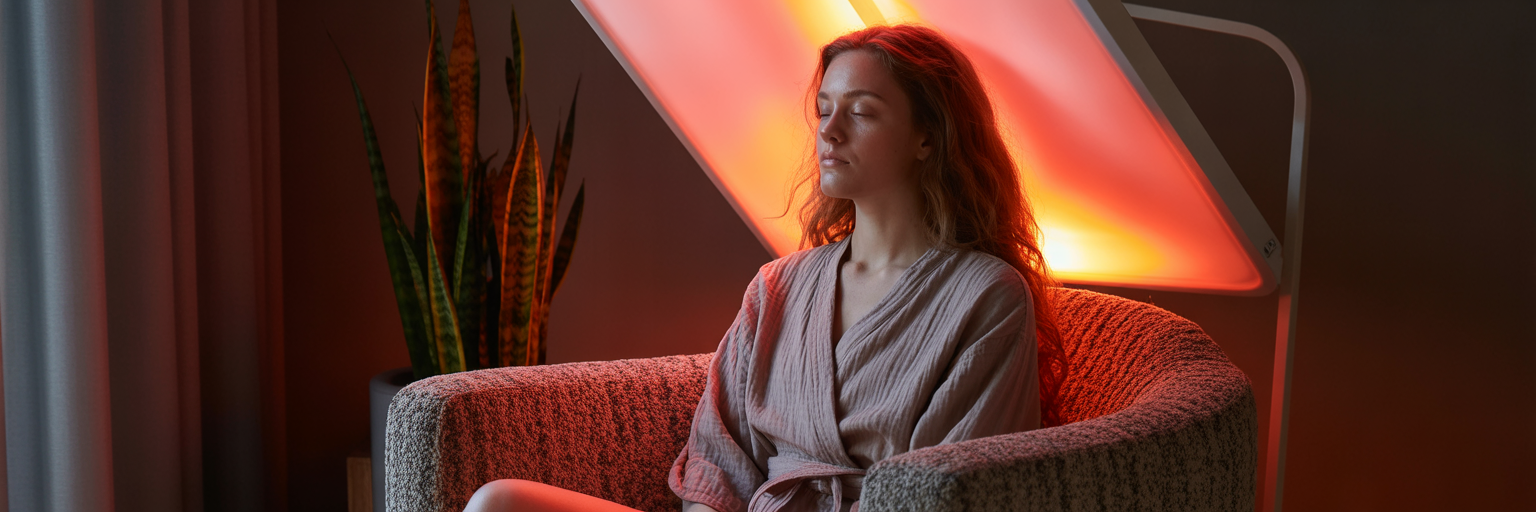
Your body’s internal clock, or circadian rhythm, is highly sensitive to light. The blue light emitted from screens in the evening can suppress melatonin production and signal to your brain that it’s still daytime. Red light therapy (RLT) offers a solution. Specific wavelengths of red and near-infrared light do not have this stimulating effect. Instead, they can help regulate your circadian rhythm and reduce systemic inflammation, both of which are critical for understanding how to improve sleep quality. Using an RLT panel, like those from Mito Health, for a 10 to 15-minute session in the evening can help calm the nervous system and support your body’s natural preparation for sleep, without disrupting melatonin.
PEMF Therapy for Cellular Calm
Pulsed Electromagnetic Field (PEMF) therapy is another technology that works subtly to prepare your body for rest. A PEMF mat emits low-frequency electromagnetic fields that are similar to the frequencies found in nature. These fields interact with your body’s cells, helping to reduce inflammation, enhance circulation, and promote repair. For someone whose sleep is disturbed by aches, pains, or general physical discomfort, this can be transformative. The experience is completely passive. You simply lie on the mat while reading or listening to music, and the technology works to shift your body into a parasympathetic state with zero effort on your part. It provides a grounding effect that helps the body feel safe and ready for rest. For those new to the concept, understanding what PEMF therapy is can clarify how these invisible forces support deep recovery.
Building Your Nightly Recovery Ritual
While any of these tools can be effective on their own, their true power is unlocked through consistency. Integrating Passive Recovery Systems into a nightly pre-sleep routine creates powerful psychological and physiological cues that signal to your body and mind that it is time to wind down. The benefits for your autonomic nervous system are cumulative. With regular use, your body becomes more efficient at shifting into a restful state, making it easier to fall asleep and stay asleep. The ideal routine is highly personal, but here is one example of how you could structure your evening:
- 90 Minutes Before Bed: Begin with a more active therapy to initiate a strong nervous system response. A 3-minute cold plunge can trigger the parasympathetic rebound that will leave you feeling calm an hour later.
- 60 Minutes Before Bed: Transition to a quiet activity in a dimly lit room. Spend 15 minutes using a red light therapy panel while listening to calm music to support your circadian rhythm.
- 45 Minutes Before Bed: Move to your bedroom and lie on a PEMF mat while reading a physical book. This allows for deep cellular relaxation while you engage in a calming, screen-free activity.
- 15 Minutes Before Bed: Put away all devices. Engage in a few minutes of light stretching or simply lie quietly, allowing the calm state you’ve cultivated to deepen before you get into bed.
This sequence is just a template. The key is to experiment with different technologies, timings, and combinations to discover what works best for your unique physiology and lifestyle. As you begin to build your own ritual, you can start here to explore the options that align with your goals.
Finding the Right System for Your Body
Improving your sleep is fundamentally about learning to manage your nervous system. Passive recovery tools are remarkably effective at guiding your body from a state of stress to one of rest, but there is no single best system for everyone. The right choice depends entirely on the primary reason you struggle to sleep. By reflecting on your specific challenges, you can identify the technology most likely to help you.
- If your main issue is physical tension or sore muscles keeping you awake, the deep relaxation from heat therapy, such as an infrared sauna blanket, may be the most effective solution.
- If you struggle with a racing mind and mental restlessness, the powerful parasympathetic rebound from a cold plunge or the grounding effect of a PEMF mat could provide the calm you need.
- If you feel your sleep schedule is off or you are particularly sensitive to light at night, red light therapy can help support your natural circadian rhythm without the stimulating effects of other light sources.
It is also important to remember that these at home recovery solutions are powerful complements to, but not replacements for, foundational sleep hygiene. A dark, cool room and a consistent sleep schedule are still essential. By combining good habits with a targeted recovery tool, you create a comprehensive strategy for better sleep. Take a moment to consider what keeps you awake at night, and then explore the different types of passive recovery systems to find a solution that fits your body and lifestyle, helping you finally achieve the deep, restorative rest you need.