Understanding the Core Technologies
The pursuit of optimal health has shifted from professional clinics into our homes, powered by technologies that influence well-being at a cellular level. Two leading modalities, Pulsed Electromagnetic Field (PEMF) and Red Light Therapy (RLT), offer distinct paths to recovery, but they operate on fundamentally different scientific principles.
Pulsed Electromagnetic Field therapy uses low-frequency electromagnetic fields that interact with your body’s natural magnetic fields. Think of it as a cellular battery charger. Over time, cells can lose their electrical charge, leading to dysfunction. PEMF works to restore this natural charge, which helps improve the function of cell membranes and ion channels. For a more detailed explanation of the science, you can explore what PEMF therapy is and how it works without producing any heat, a key distinction from many other therapies.
Red Light Therapy, also known as photobiomodulation, operates differently. It uses specific wavelengths of red and near-infrared light that penetrate the skin. The core mechanism involves the absorption of these light photons by mitochondria, the powerhouses within our cells. This process acts as a form of cellular fuel, boosting the production of ATP (adenosine triphosphate), which is the primary energy currency for all cellular activities. More energy means cells can perform their functions more effectively, from repair to replication.
The fundamental difference is clear. PEMF works with magnetic fields to optimize the foundational electrical function of cells, essentially tuning them up. In contrast, RLT uses light energy to directly fuel cellular metabolic processes, giving them the power they need to work better. Understanding this distinction is the first step when you compare PEMF and red light therapy for your personal wellness goals.
The Biophysical Impact of PEMF Therapy
Building on its foundational science, PEMF therapy offers unique effects due to its deep-acting and systemic nature. Its influence extends far beyond the surface, reaching parts of the body that other modalities cannot.
Deep Tissue and Bone Penetration
One of the most significant advantages of PEMF is that magnetic fields are not impeded by skin, muscle, or even bone. This allows the therapy to penetrate deep into the body, reaching tissues like joints, organs, and the skeletal system. While light-based therapies are limited by their absorption depth, PEMF can influence cellular health at a much deeper level. This is why it has been used in clinical settings to support bone healing and address issues within dense joint structures.
Systemic Recovery and Circulation
When you use a full-body PEMF mat, you are treating your entire system simultaneously. This makes it exceptionally effective for addressing widespread inflammation, improving overall circulation, and promoting whole-body rejuvenation. For athletes recovering from intense training or individuals dealing with systemic stress, this whole-body approach is invaluable. A PEMF mat for pain relief can address body-wide aches and discomfort, rather than just one specific spot, by supporting the body's natural healing processes on a global scale.
Support for Chronic Conditions
Because PEMF influences cellular function across the entire body, it is well-suited for managing persistent, non-localized conditions. By helping to restore cellular health systemically, it can support the body in managing chronic pain and improving overall function from the ground up. Many people are surprised by the experience of PEMF therapy at home, as the sensation is often very subtle. This is because the work is happening at a deep, cellular level, and you can learn more about why PEMF feels invisible while delivering profound benefits.
The Cellular Action of Red Light Therapy

In contrast to the systemic reach of PEMF, Red Light Therapy offers a more targeted, surface-to-mid-depth action. Its effects are concentrated and powerful within the specific areas it treats, making it a precision tool for certain wellness goals.
Targeted Cellular Energy Boost
The effectiveness of RLT is concentrated where the light can penetrate, which is primarily the skin and the muscle tissue just beneath it. This makes it an ideal tool for addressing issues in specific, localized areas. Instead of treating the whole body at once, you can direct the light to a sore shoulder, a tired facial muscle, or a slow-healing scar, delivering a potent dose of energy exactly where it is needed most.
Skin Health and Collagen Production
One of the most well-known red light therapy benefits is its remarkable impact on skin health. By boosting ATP production in skin cells, RLT stimulates fibroblasts, which are the cells responsible for creating collagen and elastin. This increased production leads to tangible results, such as improved skin tone, a reduction in fine lines, and accelerated healing of surface wounds or scars. It directly fuels the very cells that keep skin looking firm and youthful.
Localized Muscle Repair
For athletes or anyone active, red light therapy for muscle recovery is a powerful application. After a strenuous workout, an RLT panel can be aimed directly at a specific sore muscle group, like the quadriceps or biceps. This targeted delivery of light energy helps reduce localized inflammation and provides the cellular fuel needed to speed up the repair process. It is an excellent solution for addressing the acute soreness that follows intense physical exertion, helping you get back to your routine faster. You can discover more about using red light therapy at home to support your fitness goals.
Comparing Applications for Specific Wellness Goals
Now that we understand the distinct mechanisms and effects of each technology, we can directly compare their practical applications. The best choice depends entirely on your specific wellness goals. This is not about which technology is better overall, but which is the right tool for your particular job.
This table provides a clear, at-a-glance comparison to help you match your specific health and recovery goals with the most effective technology. The choice depends on whether your issue is deep and systemic or targeted and superficial.
| Wellness Goal | Best Choice: PEMF Therapy | Best Choice: Red Light Therapy | Reasoning |
|---|---|---|---|
| Chronic, Deep Pain (e.g., Arthritis, Back Pain) | ✔️ | Magnetic fields penetrate deep into joints and tissues where light cannot reach. | |
| Acute Muscle Soreness (Post-Workout) | ✔️ | Targeted light application reduces localized inflammation and speeds repair in specific muscles. | |
| Systemic Inflammation / General Wellness | ✔️ | Full-body application addresses widespread inflammation and improves overall cellular function. | |
| Skin Rejuvenation (Wrinkles, Tone) | ✔️ | Light energy directly stimulates collagen and elastin production in the skin. | |
| Bone Healing and Joint Health | ✔️ | PEMF is clinically recognized for its ability to stimulate cellular repair in dense bone tissue. | |
| Wound and Scar Healing | ✔️ | Boosts cellular energy at the surface level to accelerate tissue regeneration. |
For pain management, the choice is clear. PEMF is better suited for chronic, deep-seated pain like arthritis or systemic back pain because its magnetic fields can reach deep joints. RLT excels at treating acute, surface-level muscle soreness after a workout.
When it comes to inflammation, PEMF offers a systemic, whole-body approach to reducing widespread inflammation. RLT, on the other hand, is perfect for targeted application on localized swelling, such as a sprained ankle or a specific inflamed muscle.
For physical recovery, athletes can use both. A PEMF mat provides foundational, whole-body rejuvenation to support overall performance and reduce systemic stress. An RLT panel is the go-to for spot-treating a strained muscle or a particularly fatigued area.
In some areas, one technology is the undisputed choice. RLT is superior for all skin-related goals, from anti-aging to scar reduction. Conversely, PEMF has a distinct advantage for bone health and deep joint support. They are distinct at home recovery tools designed for different jobs.
Device Formats and Practical At-Home Use

Beyond the science, the practicalities of using these devices at home can be a major deciding factor. The user experience and how each technology integrates into your daily life are quite different.
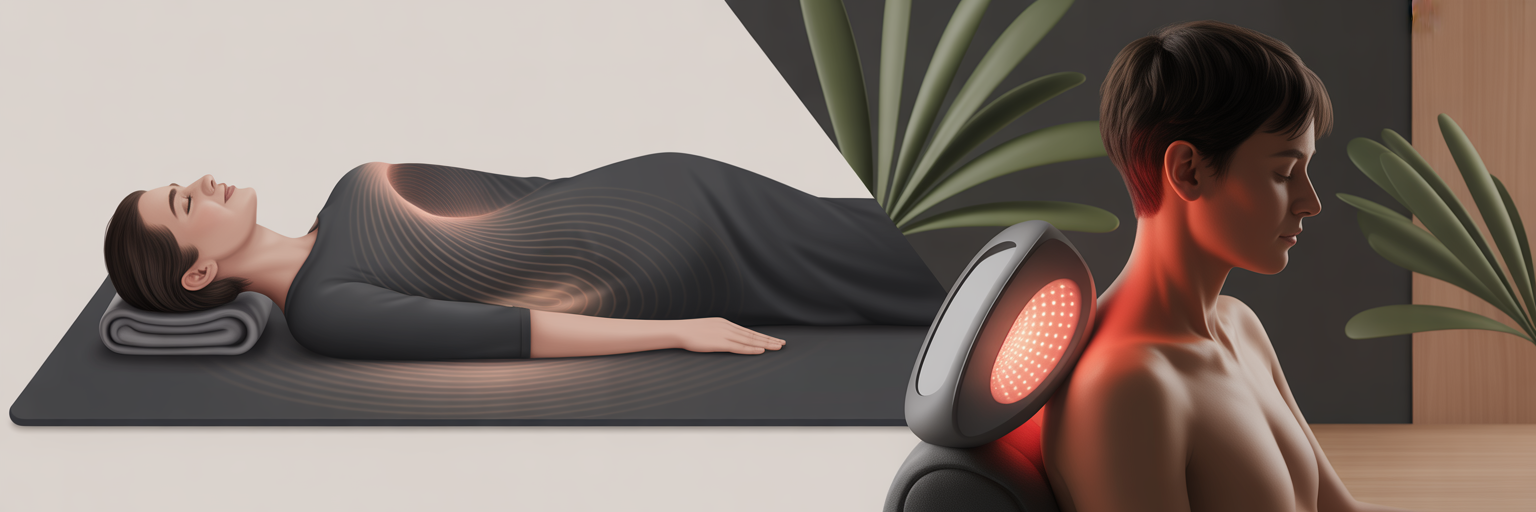
PEMF devices are most commonly available as large mats designed for passive, full-body treatment. The experience is often described as "set it and forget it." You simply lie down on one of our PEMF therapy mats, select a program, and relax, read, or even nap while the technology does its work. This makes it incredibly easy to integrate into a daily routine, such as first thing in the morning or before bed.
RLT devices, in contrast, typically come in the form of panels, wands, or masks. Using them requires a more active and focused session. You must position the device, such as one of our red light therapy panels, to target a specific body part for a set duration. This is a more hands-on approach, ideal for those who want to treat particular areas with precision.
Ultimately, the choice in user experience is between a passive, relaxing, whole-body session with PEMF and an active, targeted session with RLT. For some, the convenience of a passive therapy is paramount. For others, the ability to spot-treat is more important. Some advanced users even create a "stacked" recovery routine, using a PEMF mat for daily foundational wellness and an RLT panel to address acute issues as they arise, getting the best of both worlds.
Making the Right Choice for Your Needs
Choosing between PEMF and Red Light Therapy comes down to aligning the right technology with your personal health objectives and lifestyle. There is no single "best" option, only the right tool for your specific needs.
To simplify your decision, consider the following:
Consider a PEMF Mat if your primary goals are:
Deep tissue and bone health
Managing chronic, widespread pain
Systemic recovery and circulation
Foundational, whole-body wellness
Consider Red Light Therapy if your primary goals are:
Skin rejuvenation and anti-aging
Healing wounds or reducing scars
Relieving targeted muscle soreness
Reducing localized inflammation
A crucial safety note: Individuals with electronic implants, such as pacemakers or defibrillators, must consult their doctor before using PEMF therapy due to potential magnetic field interference. Red Light Therapy does not carry this specific risk.
By understanding your own body and wellness priorities, you can confidently select the technology that will serve you best on your recovery journey.