
The conversation around physical recovery has moved beyond addressing isolated symptoms. We now understand it as a holistic process, where the synergy between different methods can produce results far greater than the sum of their parts. This shift has brought a new focus to the strategic use of at-home recovery systems, which offer powerful ways to support your body's natural healing cycles. While tools like cold plunges, infrared saunas, and PEMF mats are effective on their own, their true potential is often left untapped when used in isolation. Think of it as the difference between a solo instrument and a full orchestra. Each has its place, but together they create something far more complex and powerful.
The core idea is that a single tool addresses only one piece of the recovery puzzle. A cold plunge excels at reducing inflammation, while an infrared sauna promotes circulation and detoxification. Using them independently is helpful, but it can be like trying to fix a complex machine by only turning one gear. The real question is, what happens when you use these tools in a specific, intelligent sequence? The effectiveness of layering comes from targeting different physiological systems in a deliberate order. A comprehensive recovery cycle must address everything from clearing metabolic waste to promoting cellular repair and calming the nervous system. By understanding the unique role each tool plays, you can begin to build a sequence that guides your body through a complete and restorative process. For those just beginning to explore these modalities, understanding where to start is the first step toward building an effective routine.
Why Layering Passive Recovery Tools Is Key
The conversation around physical recovery has moved beyond addressing isolated symptoms. We now understand it as a holistic process, where the synergy between different methods can produce results far greater than the sum of their parts. This shift has brought a new focus to the strategic use of at-home recovery systems, which offer powerful ways to support your body's natural healing cycles. While tools like cold plunges, infrared saunas, and PEMF mats are effective on their own, their true potential is often left untapped when used in isolation. Think of it as the difference between a solo instrument and a full orchestra. Each has its place, but together they create something far more complex and powerful.
The core idea is that a single tool addresses only one piece of the recovery puzzle. A cold plunge excels at reducing inflammation, while an infrared sauna promotes circulation and detoxification. Using them independently is helpful, but it can be like trying to fix a complex machine by only turning one gear. The real question is, what happens when you use these tools in a specific, intelligent sequence? The effectiveness of layering comes from targeting different physiological systems in a deliberate order. A comprehensive recovery cycle must address everything from clearing metabolic waste to promoting cellular repair and calming the nervous system. By understanding the unique role each tool plays, you can begin to build a sequence that guides your body through a complete and restorative process. For those just beginning to explore these modalities, understanding where to start is the first step toward building an effective routine.
The Three-Phase Science of Recovery Sequencing
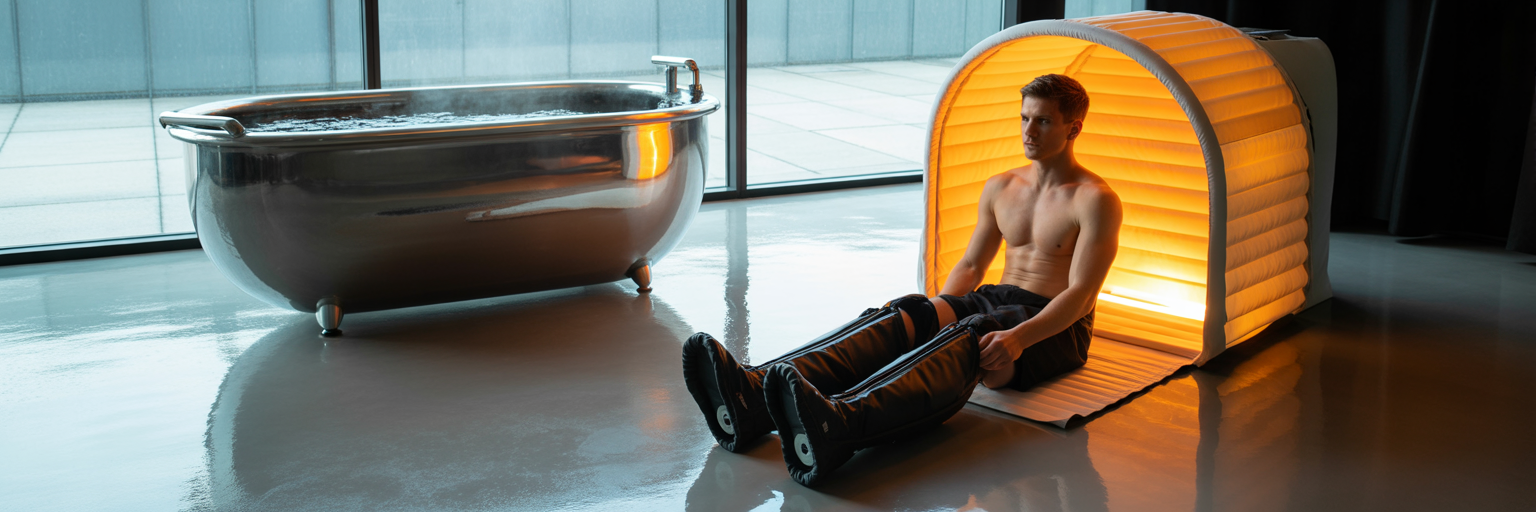
To layer recovery tools effectively, you must first understand the physiological logic behind the sequence. A well-designed protocol guides your body through three distinct phases, each preparing it for the next. This creates a cascading therapeutic effect that isolated treatments cannot replicate. As experts in athletic recovery note, the sequence of these modalities is critical. According to a recent analysis by Altoona Biohackers, each step prepares the body for the next, creating a powerful synergy.
Phase 1: Mechanical Clearance
The first objective after intense physical exertion is to clear out the metabolic byproducts that accumulate in your muscles, such as lactate and other cellular waste. This is what causes that familiar feeling of soreness and heaviness. The goal of this phase is mechanical clearance, physically flushing these substances out of the tissues and into the lymphatic system, where they can be processed and eliminated. Tools like pneumatic compression boots are designed specifically for this purpose. They apply a sequential, pulsing pressure that moves from your feet toward your core, effectively milking the waste out of your limbs. This initial step is like clearing debris from a worksite before the real repair work can begin. It creates a cleaner environment within the muscle tissue, making it more receptive to the healing processes that follow.
Phase 2: Cellular Repair and Saturation
Once the tissues are cleared of metabolic waste, the focus shifts from cleanup to repair. Your cells are now primed to receive the energy and resources needed to mend damaged muscle fibers and reduce inflammation at its source. This is where some of the most sophisticated muscle recovery techniques come into play. Technologies like red light therapy and Pulsed Electromagnetic Field (PEMF) therapy work at the subcellular level. Red light, for instance, is absorbed by the mitochondria, the powerhouses of your cells, stimulating them to produce more adenosine triphosphate (ATP). ATP is the primary energy currency of the body, and an abundance of it directly fuels the repair process. Similarly, PEMF therapy uses low-frequency magnetic fields to enhance cellular function, improve circulation, and reduce inflammation without generating heat. High-quality red light therapy panels, such as those from a reputable provider like Mito Health, are engineered to deliver specific wavelengths of light that are optimal for this cellular saturation, ensuring your muscles get the energy they need to rebuild stronger.
Phase 3: Neural and Thermal Reset
The final phase addresses the nervous system. Intense training and even daily stress keep your body in a sympathetic state, often called "fight-or-flight." This state is characterized by elevated heart rate, high cortisol levels, and general tension, all of which inhibit deep recovery. The goal of this last step is to trigger a shift into the parasympathetic "rest-and-digest" state. This is where your body does its most profound healing. Tools that induce a thermal reset are particularly effective here. An infrared sauna, for example, uses gentle heat to relax muscles, lower blood pressure, and calm the mind. The deep, penetrating warmth helps lower cortisol and signals to your brain that the period of stress is over. This final step closes the recovery loop, preparing your body and mind for the deep, restorative sleep that is essential for consolidating the gains from your training and recovery efforts.
A Foundational Protocol for Peak Recovery
With the three-phase science in mind, we can construct a practical, powerful protocol that serves as a workhorse for general recovery. This sequence is designed to systematically move your body through clearance, repair, and reset. It is a direct application of the principles discussed, creating a synergistic effect that leaves you feeling refreshed and ready for your next challenge.
1. Step 1: Infrared Sauna (15–20 minutes). The protocol begins with heat. An infrared sauna session serves as the preparatory phase, warming your muscles and increasing blood circulation throughout your body. This initial vasodilation helps to mobilize metabolic waste that is lodged deep within the muscle tissue. As your core temperature rises, you also initiate a detoxification process through sweat. This step essentially primes the pump, making the subsequent cold exposure far more effective. Using one of our infrared sauna blankets makes this step incredibly accessible, allowing you to begin your recovery sequence from the comfort of your home.
2. Step 2: Cold Plunge (2–3 minutes). Immediately following the heat, you introduce a powerful contrast with a cold plunge. This rapid shift in temperature causes immediate vasoconstriction, where your blood vessels clamp down. This creates a strong "pump" effect, flushing the blood and the mobilized metabolic waste from your peripheral tissues toward your core organs for processing. This is the heart of the infrared sauna and cold plunge routine, a potent combination that dramatically enhances circulation and reduces systemic inflammation. The consistency of the temperature is key, which is why advanced systems like the Plunge Chill are so effective. They maintain a precise temperature, ensuring you get the maximum physiological benefit from every session.
3. Step 3: Compression Therapy (20 minutes). The final step is the cleanup. After the heat and cold have done the heavy lifting of mobilizing waste, compression therapy systematically drains it from your limbs. The sequential pressure ensures that the waste products that were flushed into your lymphatic system are efficiently moved along, preventing them from resettling in your muscles. This step is crucial for mitigating next-day soreness and stiffness. By finishing with compression, you are completing the three-phase process, leaving your tissues clean, your inflammation managed, and your body ready to rebuild.
Tailoring Stacks to Your Training Goals

While the foundational protocol is a powerful all-purpose tool, the optimal recovery stack is not universal. True optimization requires tailoring your approach to your specific training stimulus. The physiological demands of an endurance run are vastly different from those of a heavy lifting session, and your recovery should reflect that. The most critical variable to consider is the timing of cold exposure, which can either accelerate recovery or inadvertently hinder your progress depending on your goals.
For the endurance athlete, the primary goals are to reduce systemic inflammation and rapidly flush the large volume of metabolic waste generated during long-duration exercise. In this case, immediate post-training cold exposure is highly beneficial. A cold plunge within an hour of finishing a long run or ride helps to quickly bring down inflammation and clear waste, allowing the body to shift into a recovery state faster. Their focus is less on building new muscle tissue and more on restoring homeostasis and regulating the nervous system. A simple but effective stack would be a cold plunge followed by a session with compression boots to complete the clearance process.
For the strength or hypertrophy athlete, however, the calculus changes. The acute inflammation that follows a heavy resistance training session is not just a side effect; it is a critical signaling process that initiates muscle protein synthesis, the very mechanism of muscle growth. Research into post-exercise recovery, like that highlighted by Spark Imagine, suggests that immediate cold water immersion can blunt these crucial anabolic signals, potentially reducing long-term gains in muscle size and strength. Therefore, strength athletes should delay cold immersion for at least four to six hours post-workout. An immediate post-workout stack for them might instead involve red light therapy to support cellular energy production, followed by compression to manage swelling without interfering with the inflammatory signals. The cold plunge can then be used later in the day or on a rest day to manage overall inflammation. This nuanced approach highlights the difference between a cold plunge and an infrared sauna blanket, as each serves a different purpose depending on the context.
| Factor | Endurance Athlete Protocol | Strength Athlete Protocol |
|---|---|---|
| Primary Goal | Reduce systemic inflammation, flush metabolic waste | Manage soreness without blunting muscle growth signals |
| Cold Plunge Timing | Immediately post-workout (within 1 hour) | Delayed (4-6 hours post-workout or on rest days) |
| Immediate Post-Workout Stack | Cold Plunge -> Compression | Red Light Therapy -> Compression |
| Physiological Rationale | Maximizes waste clearance and reduces overall stress | Preserves acute inflammatory signals needed for hypertrophy |
Starting Smart: A Guide for Beginners
The world of recovery stacking can seem complex, but the key is to start simply and listen to your body. Attempting an advanced, multi-step protocol from day one can be overwhelming and may even be counterproductive. The most effective approach is to introduce new modalities gradually, allowing you to understand how your body responds to each one individually before you begin to combine them.
Here are a few practical steps for getting started:
- Use tools individually first. Before you even think about stacking, use any new recovery tool on its own for one to two weeks. This will help you establish a baseline. You will learn how a session in an infrared sauna makes you feel versus how you feel after using compression boots. This personal experience is invaluable.
- Start with short durations. There is no need to push the limits initially. Begin with a 10-minute session in an infrared sauna blanket or a 15-minute session with a PEMF mat a few times a week. For a cold plunge, you might start with just 30 seconds at a more moderate temperature. The goal is consistency, not intensity.
- Track subjective feedback. Pay close attention to how you feel in the hours and days following a session. Note your levels of muscle soreness, your energy throughout the day, and, most importantly, the quality of your sleep. This subjective data will tell you what is working for you.
- Introduce a simple first stack. Once you have a feel for individual tools, you can begin to layer passive recovery tools in a simple sequence. A great starting point is to use red light therapy for 10 minutes, followed immediately by a 20-minute session in compression boots. Notice the difference in how your legs feel compared to when you used either tool alone. This simple experiment will demonstrate the power of stacking firsthand. As you grow more comfortable, you can explore a wider range of topics and techniques on our main blog.
Advanced Stacking with Objective Data

For the experienced user who has mastered the basics and is looking for the next level of optimization, the key is to move from subjective feeling to objective data. While listening to your body is always important, biometric data can provide a more precise picture of your physiological state, allowing you to tailor your recovery with incredible accuracy. The single most valuable metric for this purpose is Heart Rate Variability (HRV).
In simple terms, HRV is a measure of the variation in time between your heartbeats. It serves as a powerful indicator of your autonomic nervous system's balance. A high HRV suggests that your body is in a parasympathetic, or "rest-and-digest," state, indicating that you are well-recovered and ready to handle stress, whether from a hard workout or an intense recovery protocol. Conversely, a low HRV signals that your body is in a sympathetic, "fight-or-flight," state, meaning it is under stress and needs more gentle support. Using a wearable device to track your daily HRV reading can transform your approach to advanced muscle recovery.
On days when your HRV is low, your body is telling you to prioritize rest. This is not the time for an intense heat-and-cold contrast session, which can act as another stressor. Instead, opt for a gentle, parasympathetic-focused stack, such as a 30-minute session on a PEMF mat followed by 15 minutes of red light therapy. This combination will help nudge your nervous system back toward balance without adding stress. On days when your HRV is high, your body is primed for adaptation. This is the ideal time to use a more intensive protocol, like the foundational sauna-and-plunge stack. Your body is ready to handle the hormetic stress and will reap the maximum benefit. For these intense sessions, tools like the Ice Blanket can offer a convenient way to apply targeted cold therapy as part of a sophisticated, data-driven routine.
The Unwavering Importance of Sleep
In any discussion of recovery, one element stands above all others: sleep. No technology stack, no matter how advanced or perfectly sequenced, can compensate for a chronic lack of high-quality sleep. It is the non-negotiable foundation upon which all other recovery efforts are built. During deep sleep, your body releases growth hormone, consolidates memories, and performs the vast majority of its cellular repair work. Without adequate sleep, you are simply leaving your biggest recovery gains on the table.
It is best to view recovery tools not as substitutes for sleep, but as powerful multipliers. Their benefits are maximized when they are used to support a body that is already getting seven to nine hours of quality sleep per night. In fact, certain tools can create a positive feedback loop with your sleep. For example, using an infrared sauna in the evening can help relax your muscles and mind, and the subsequent drop in your core body temperature after the session is a key biological signal that helps initiate sleep. Similarly, a PEMF mat session before bed can help calm the nervous system, making it easier to fall asleep and stay asleep.
Mastering your sleep hygiene—by maintaining a consistent schedule, creating a dark and cool environment, and avoiding screens before bed—is the first and most critical step in any serious recovery plan. The most sophisticated protocol in the world will be blunted by a sleep-deprived body. Once your sleep is dialed in, exploring the right systems to complement your routine is the next step in building a truly resilient body.