Explore how photobiomodulation works at a cellular level to enhance vitality and mental clarity. Learn practical steps for creating a safe and effective at-home routine.
Created at: May 20, 2026 | 4 Minutes read
There is something quietly convincing about the way light shapes how we feel. Most of us have noticed it without ever putting a name to it — the particular lift that comes from sitting near a window on a bright morning, or the heaviness that creeps in during the short, grey days of winter. Light is not just something we see. It is something our biology responds to at a level far deeper than mood or perception.
We have known this in a general sense for a long time. The morning sun calibrates our internal clock. Sunlight on skin triggers the production of Vitamin D. What is newer, and still surprising to many people, is the idea that specific, targeted wavelengths of light can influence how our cells produce energy — and that this process can be replicated at home, on your own schedule, with a panel that sits in a corner of your bedroom or living room.
The science behind this is called photobiomodulation, and while the word sounds like something out of a research paper, the underlying idea is not complicated. Certain wavelengths of light — specifically red light in the range of 630 to 670 nanometres and near-infrared light between 800 and 850 nanometres — are capable of penetrating the skin and reaching the cells beneath.
Most wavelengths of visible light cannot do this. Blue light, for instance, barely reaches the surface layers of skin. Red and near-infrared light behave differently. They pass through tissue, reaching muscle, connective tissue, and even bone at the right intensity. This penetration is the starting point for everything that follows.
Once that light reaches the cells, it interacts with the mitochondria — the structures inside each cell responsible for converting nutrients into usable energy. Think of your mitochondria as small generators. Under ideal conditions, they run efficiently. But stress, poor sleep, processed food, and the general wear of modern life gradually reduce their output.
The light from a red light therapy device stimulates these mitochondria to produce more ATP, which is adenosine triphosphate — the molecule that powers virtually every cellular process in the body. More ATP means cells can carry out their functions with greater efficiency. Repair happens faster. Inflammation settles more readily.
Metabolic processes that had been running sluggishly begin to improve. The cumulative effect of this, felt across billions of cells simultaneously, is what people describe as a red light therapy energy boost — a sense of restored vitality that is hard to attribute to any single cause until you understand what is happening underneath.
The brain is where this energy increase becomes especially relevant to mood and mental clarity. It is the most metabolically demanding organ in the body, consuming roughly twenty percent of your total energy despite representing only about two percent of your body weight.
When cellular energy production is low, the brain is often one of the first places the effects become noticeable — as difficulty concentrating, low motivation, that persistent sense of mental fog that no amount of coffee seems to fully resolve. When photobiomodulation increases ATP production, the brain responds. Neurons communicate more effectively.
Cognitive processing feels less effortful. The fog begins to lift, not dramatically, but in a way that builds gradually and becomes easier to recognize over time.
The connection between red light therapy and mood runs deeper than cellular energy alone. Research into photobiomodulation for well-being has found evidence that this wavelength of light may influence neurotransmitter activity — particularly serotonin, the chemical most associated with feelings of stability, calm, and general well-being.
There is also evidence suggesting that red and near-infrared light can help regulate melatonin production, which in turn improves sleep quality. This matters more than it might initially seem. Sleep is not a passive state. It is when the brain consolidates memory, processes emotional experiences, clears metabolic waste, and resets the systems that govern mood and stress tolerance.
When sleep improves, everything improves along with it — energy during the day, emotional resilience, the ability to manage pressure without becoming overwhelmed. The benefits of near infrared light, in this sense, are not confined to any single biological mechanism. They ripple outward.
It is worth being clear about what red light therapy is not. It is not a treatment for clinical depression or anxiety disorders. It is not a replacement for professional care when that care is needed. What it is, for most people, is a genuinely useful addition to a recovery-oriented lifestyle — one that supports the body's own systems rather than overriding them.
It works well alongside exercise, adequate nutrition, time outdoors, and intentional rest. It is one practice among several, and it tends to amplify the effects of the others rather than standing alone.
Improved circulation is another mechanism worth understanding. Red and near-infrared light promote vasodilation — the widening of blood vessels — which increases the delivery of oxygen and nutrients throughout the body, including to the brain.
Metabolic waste products that accumulate in tissues and contribute to fatigue and mental sluggishness are cleared more efficiently. The result is not a stimulant effect, like caffeine, but something more like a sustained baseline improvement. People who use red light therapy consistently often describe it as feeling more like themselves — more even, more capable, less burdened by the low-level fatigue that had become their normal.
How you integrate red light therapy at home matters as much as the device you choose.
The most common mistake people make when starting a new wellness practice is going too hard at the beginning and burning out before the results have time to accumulate. Red light therapy does not reward effort in the way that exercise does. It rewards consistency.
A ten-to-twenty minute session, done regularly, is far more valuable than a forty-minute session done once a week. Most people benefit from three to five sessions per week, positioned six to twelve inches from the panel.
Close enough for the light to be effective, not so close that you are uncomfortable. The session itself requires nothing from you. You sit or stand in front of the panel. You can read, listen to something, meditate, or simply be still.
There is a principle in photobiomodulation research called the biphasic dose-response, and it is worth knowing about before you begin. It describes the fact that light exposure has a window of effectiveness. Too little produces no meaningful response. Too much — either in a single session or through cumulative overexposure — can actually diminish results.
This is not unique to red light therapy. Many biological interventions behave this way. The practical takeaway is that you do not need to push harder to get more from this tool. You need to stay within the effective range and let consistency do the work.
The most sustainable way to build any new habit is to attach it to something you already do. If your mornings include time for coffee and quiet before the rest of the household wakes up, the panel can sit in that space. If you cool down after exercise, a red light session fits naturally into that window.
Some people use it in the evening as part of winding down, pairing it with reading or a few minutes of breathing exercises. The specific time matters less than the regularity. Making it part of a routine that already exists removes the friction that causes new habits to fall apart.
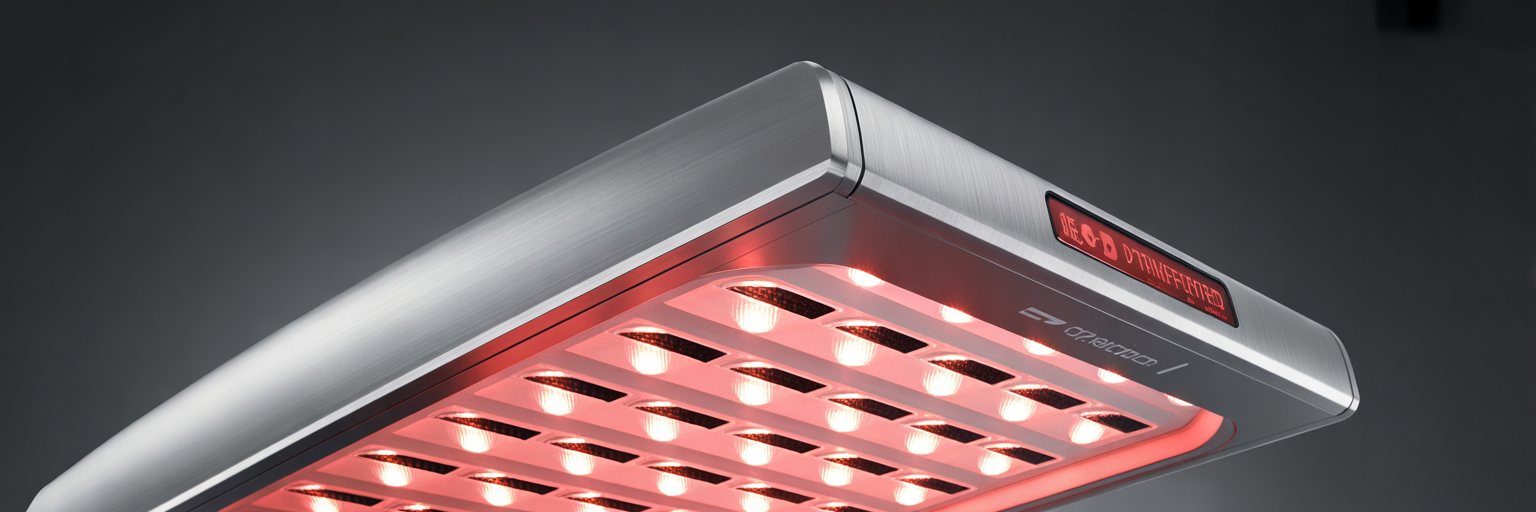
Choosing the right device shapes how effective your routine will be. The at home red light therapy panel market has expanded significantly in recent years, and not all devices are created equal. The two specifications that matter most are wavelength and irradiance.
Wavelength determines whether the light will penetrate effectively — you are looking for panels that deliver light in the clinically studied ranges, around 660 nanometres for red and 850 nanometres for near-infrared.
Irradiance refers to the power output of the device, measured in milliwatts per square centimetre. A higher irradiance means more light energy is delivered to your cells per unit of time, which translates to shorter sessions for the same biological effect. Panels with low flicker and built-in timers contribute to a more comfortable and consistent experience.
Size is a practical consideration that often comes down to your goals. A small, targeted device works well for localized concerns — a specific joint, the face, a chronically tight area of muscle. For systemic benefits like improved energy, mood, and sleep, a larger panel that covers more of the body at once is more effective.
A medium panel covering the torso and legs can serve most people well as a starting point. Full-body panels offer the broadest systemic exposure and tend to produce the most noticeable results for people focused on overall vitality rather than a specific issue.
A device like the Joovv Solo 3.0 represents the kind of specification — wavelength accuracy, strong irradiance, durable build — that makes a meaningful difference over the long term compared to underpowered alternatives.
Approaching red light therapy safely requires little beyond a few straightforward practices. Protect your eyes during sessions, not because the light is necessarily dangerous, but because looking directly into high-powered LEDs is uncomfortable and unnecessary.
Use the provided eyewear or simply close your eyes and face away from the panel if you prefer. If you are taking medications that increase light sensitivity, or if you are pregnant, a brief conversation with your physician before starting is a sensible step. People with fair or sensitive skin may want to begin with shorter sessions — five to ten minutes — and build from there as their comfort increases.
Tracking progress with red light therapy requires a longer timeframe than most people initially expect. The benefits are cumulative, which means they build gradually over weeks rather than appearing after a single session.
A simple journal kept over four to twelve weeks — noting energy levels, sleep quality, and general mood on a basic numeric scale each day — tends to reveal patterns that individual days obscure. The change rarely feels dramatic in the moment. Looking back over six weeks of notes, though, most people can identify a clear upward trend that would have been invisible without the record. Patience with this process is not passive. It is part of the practice.
Red light therapy works well alongside other recovery tools — PEMF therapy mats, deliberate heat and cold exposure, and restorative movement practices all address the body through different mechanisms, and combining them thoughtfully tends to produce results that are greater than any single approach alone.
If you are building out a home recovery routine, red light therapy is a strong foundation to build from — not because it does everything, but because its effects on cellular energy support everything else you do. If you are still exploring your options and want to understand how different at-home recovery systems compare in terms of daily use, investment, and the kinds of results people realistically experience, the Personal Recovery Lab directory covers each category in depth.
Prepared for Greg Reed. Copyright 2026. All rights reserved.