The Modern Disconnect Between Rest and Restoration
We’ve all felt it. The peculiar exhaustion that settles in after a day spent sitting at a desk, staring at screens. You haven't run a marathon, yet you feel completely drained. This is the paradox of modern fatigue, where a sedentary body coexists with a mentally overstimulated mind, creating a unique form of exhaustion that sleep alone often fails to fix.
Many of us mistake passive entertainment for true rest. We finish a demanding workday and immediately turn to streaming services or social media feeds, believing we are unwinding. In reality, these activities often increase our cognitive load. The constant stream of information, notifications, and emotional triggers keeps our brains in a low-grade state of alert, preventing them from genuinely recharging.
This "always-on" state has a real physiological cost. It keeps our bodies in a state of chronic, low-level stress, which slowly depletes the neurotransmitters and hormonal resources responsible for energy and emotional stability. The result is a persistent feeling of being tired, irritable, and unmotivated, even after a full night's sleep.
The solution lies in understanding that true rest is not merely the absence of activity. It is a deliberate practice. Intentional passive recovery for energy is a targeted process designed to replenish the body and mind. It’s about consciously choosing activities that quiet the noise, rather than just replacing one type of stimulation with another.
Activating Your Body's Natural Recovery Switch

To understand how intentional rest works, it helps to think of your body’s autonomic nervous system (ANS) like the controls of a car. It has an accelerator and a brake. The sympathetic nervous system is the accelerator, kicking in during moments of stress, excitement, or danger. It floods your body with cortisol and adrenaline, preparing you for action. The parasympathetic nervous system is the brake, responsible for rest, digestion, and repair.
Modern life, with its constant work pressures and digital notifications, has a tendency to keep our foot pressed firmly on the accelerator. We live in a state of sustained sympathetic arousal, which leads to elevated cortisol levels, a racing mind, and that familiar feeling of being tired but wired. This is why so many of us struggle with anxiety and fatigue. We are constantly revving the engine, even when we are sitting still.
The primary function of passive recovery is to consciously engage the brake. It is the practice of intentionally triggering parasympathetic nervous system activation. Specific techniques, from controlled breathing to temperature therapy, send powerful signals to your brain that you are safe. This gives your body permission to downshift from its high-alert state and enter a mode of restoration.
When this shift occurs, the benefits are tangible. Your heart rate slows, blood pressure drops, and cortisol levels decrease. Your body can finally divert its resources toward essential maintenance, like repairing muscle tissue, reducing inflammation, and replenishing the energy stores that were depleted throughout the day. This is not just relaxation; it is a profound physiological reset.
Non-Sleep Deep Rest as a Foundational Practice
Building on the need for parasympathetic activation, one of the most effective protocols available is non-sleep deep rest (NSDR). This is not just a trendy term for a nap. NSDR refers to a set of evidence-based guided practices that induce a state of profound relaxation while you remain consciously aware. It is a powerful method for resetting your mind and body without needing to fall asleep.
The neuroscience behind NSDR is compelling. These practices have been shown to help reset the brain's dopamine system. By guiding you into a state of deep rest, NSDR helps replenish your baseline levels of dopamine, a neurotransmitter crucial for motivation, focus, and mood. When dopamine levels are balanced, you feel more driven and emotionally resilient. As a recent piece in Psychology Today highlighted, Non-Sleep Deep Rest can help replenish dopamine and improve emotional regulation, making it an excellent tool for managing daily stress.
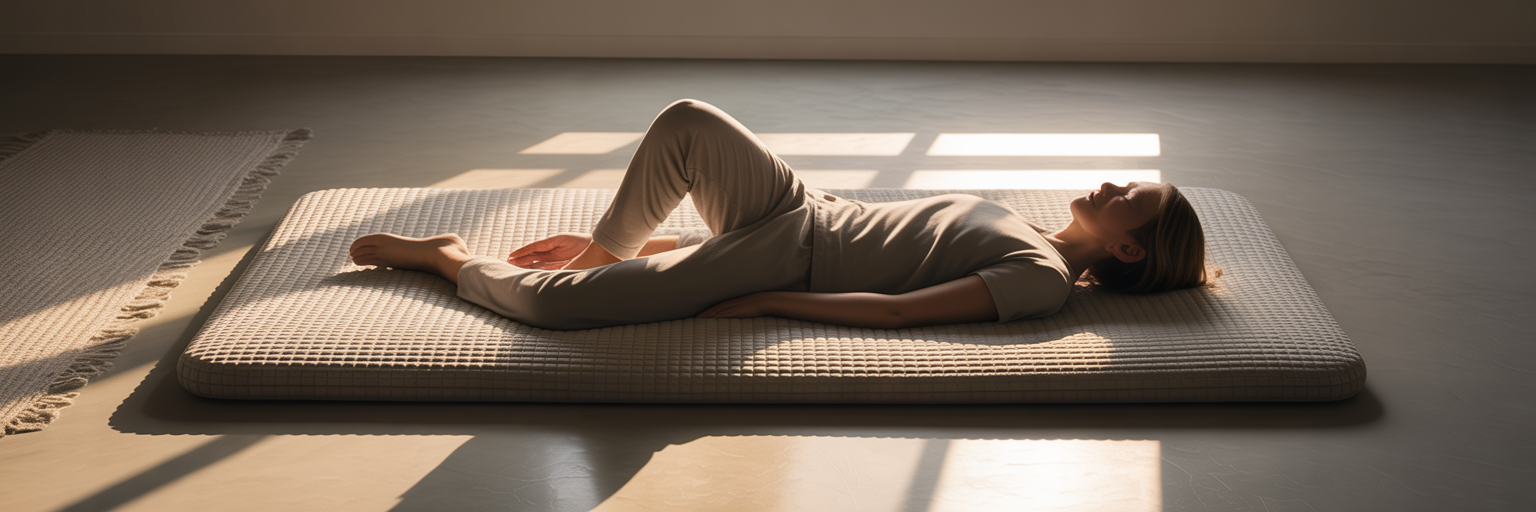
You can try a simple NSDR technique right now. Find a quiet place to lie down comfortably. Close your eyes and take a few slow breaths. Now, bring your awareness to the toes on your right foot. Simply notice any sensations there without judgment. Then, slowly move your attention up to your ankle, your calf, and your knee, continuing all the way up your body. The goal is not to do anything, but simply to observe. This focused attention helps dissolve physical tension and quiet the mind.
Scientific findings support the benefits of this practice. Even short daily sessions of 10 to 20 minutes can lead to significant improvements in memory, attention, and overall well-being. NSDR is a highly efficient recovery tool that requires no special equipment, making it a foundational practice for anyone looking to improve their daily vitality.
A Toolkit of Passive Recovery Modalities

Beyond NSDR, a variety of at-home recovery tools can help you intentionally shift into a restorative state. The recent social media trend of "bed rotting" hints at a collective need for stillness, but its power is lost when paired with endless scrolling. True restoration comes from what we might call Intentional Stillness, where you disconnect from digital devices and engage in a practice that actively calms your nervous system.
One of the simplest yet most powerful tools is your own breath. A simple breathwork for stress technique is the 4-8 method: inhale slowly through your nose for a count of four, and then exhale slowly through your mouth for a count of eight. The long exhale stimulates the vagus nerve, which is a primary component of the parasympathetic nervous system, signaling immediate calm to your body.
Temperature and light therapies also offer profound benefits for energy and mood. For instance, the deep, penetrating warmth of our infrared sauna blankets can induce a state of deep relaxation and improve sleep quality. A cold plunge, while initially jarring, triggers a significant release of norepinephrine and dopamine, creating a lasting elevation in mood and alertness. Red light therapy panels work at a cellular level, stimulating mitochondria to produce more energy.
For recovery that targets the very foundation of your body’s systems, Pulsed Electromagnetic Field (PEMF) therapy offers a unique approach. As we explain in our detailed guide on PEMF therapy, these mats use low-frequency fields to support cellular function and enhance the body's natural recovery processes, promoting a sense of balance and well-being.
| Modality | Mechanism of Action | Primary Benefit for Energy & Mood |
|---|---|---|
| Infrared Sauna Blanket | Induces a deep sweat and increases heart rate, mimicking moderate exercise; promotes relaxation through warmth. | Reduces stress, promotes deep relaxation, and can improve sleep quality. |
| Cold Plunge | Triggers the release of norepinephrine and dopamine, and reduces inflammation. | Creates a lasting elevation in mood, increases alertness, and enhances focus. |
| Red Light Therapy | Stimulates mitochondria, the powerhouses of cells, to produce more ATP (cellular energy). | Enhances cellular energy production, potentially reducing physical fatigue. |
| PEMF Therapy | Uses low-frequency magnetic fields to support cellular function and natural recovery processes. | Promotes a sense of balance, reduces fatigue, and supports overall well-being at a cellular level. |
Personalizing Your Recovery for Maximum Impact
With so many options available, how do you choose the right approach? The key is to personalize your recovery by first identifying your specific type of fatigue. Learning how to improve mood with rest starts with listening to what your body is telling you. Are you feeling mentally scattered and unfocused? Or is your fatigue more emotional, showing up as irritability and overwhelm? Perhaps it is purely physical, with sore muscles and a heavy body.
Instead of following a rigid protocol, use these simple questions to guide your choice:
For mental fatigue (brain fog): Do I feel scattered and unable to concentrate? A 10-minute NSDR session can help quiet mental chatter and restore focus.
For physical fatigue (soreness): Does my body feel tired and achy? The gentle heat of an infrared sauna blanket can soothe muscles and promote physical relaxation.
For emotional fatigue (irritability): Do I feel overwhelmed or easily agitated? A few minutes of 4-8 breathwork can quickly calm your nervous system and create emotional space.
The goal is to build a personal recovery toolkit that you can draw from based on your daily needs. Some days, you might need the invigorating mood boost of a cold plunge. On others, the cellular support of a PEMF mat might be more appropriate. As we've explored in our comparison of different modalities, the best tool is the one that addresses your specific state. By experimenting with different practices, you empower yourself to respond effectively to your body’s signals, turning recovery into a dynamic and intuitive practice.
Recovery as the Bedrock of Performance
It is time to shift our perspective. Rest is not a luxury or a sign of weakness. It is a non-negotiable pillar of high performance, mental clarity, and a stable mood. While you cannot outwork chronic sleep debt, you can significantly improve your daily baseline of energy and emotional well-being by integrating intentional passive recovery into your routine.
Passive recovery tools are powerful amplifiers of your body’s innate healing capabilities. They are not substitutes for fundamental habits like quality sleep and nutrition, but they provide a direct and efficient way to manage stress and replenish your resources in a world that constantly demands more.
The core message is simple: intentional rest is productive. It is the foundation upon which energy, focus, and resilience are built. We invite you to put this into practice. For one week, schedule just 15 minutes of a chosen passive recovery practice into your daily calendar. Observe the effects on your energy, your focus, and your mood. You might be surprised at what a little intentional stillness can do.
To continue learning about optimizing your well-being, we encourage you to explore more insights on our blog.