There’s a particular kind of fatigue that doesn’t behave like normal tiredness.
It isn’t just low energy after effort, and it doesn’t always improve in a straight line with rest. Some days feel manageable in a predictable way. Other days feel like the body is working against basic stability itself — joints feel more noticeable, recovery feels slower, and even simple movement can carry a sense of extra load.
That unevenness is often what leads people to start looking at tools that don’t require active effort during use. Not exercise-based interventions, and not things that add more strain to an already sensitive system, but passive recovery inputs that can sit quietly in the background of daily life.
Red light therapy often enters the conversation at that point. Not as a treatment for Ehlers-Danlos syndrome itself, but as a system some people explore when they are trying to support comfort, recovery, or general physical tolerance in a body that already feels like it is working harder than it should.
Understanding EDS in a real-world context
Ehlers-Danlos syndrome (EDS) affects connective tissue, which plays a structural role throughout the body. That includes joints, skin, and the supporting frameworks that help movement feel stable and controlled.
In everyday terms, what people often notice isn’t just one symptom in isolation. It is the way small physical stresses accumulate. A short walk might feel fine in the moment but take longer to recover from. A minor strain can linger longer than expected. Stability can vary from day to day without a clear external reason.
This variability is part of what makes EDS difficult to manage in practical life. It isn’t always about intensity. It is about unpredictability.
Because of that, people often look for tools that don’t rely on pushing the body further, but instead support recovery capacity without adding additional demand.
Where red light therapy fits in
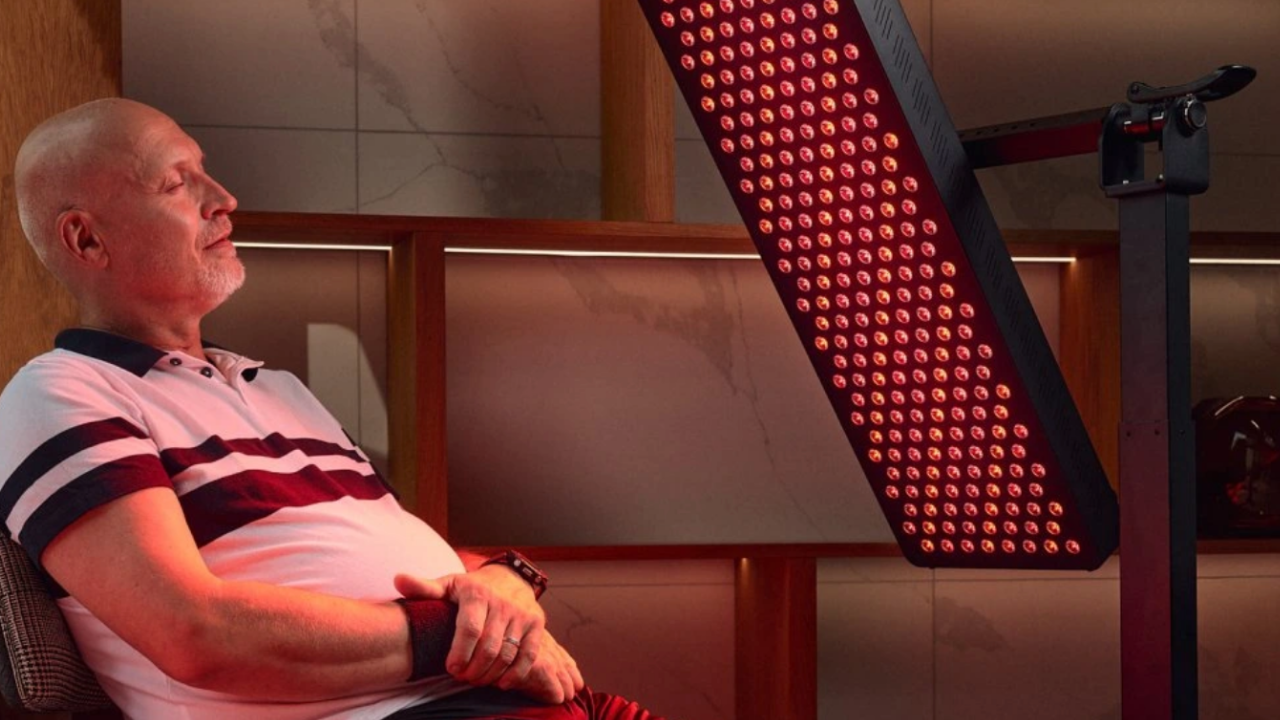
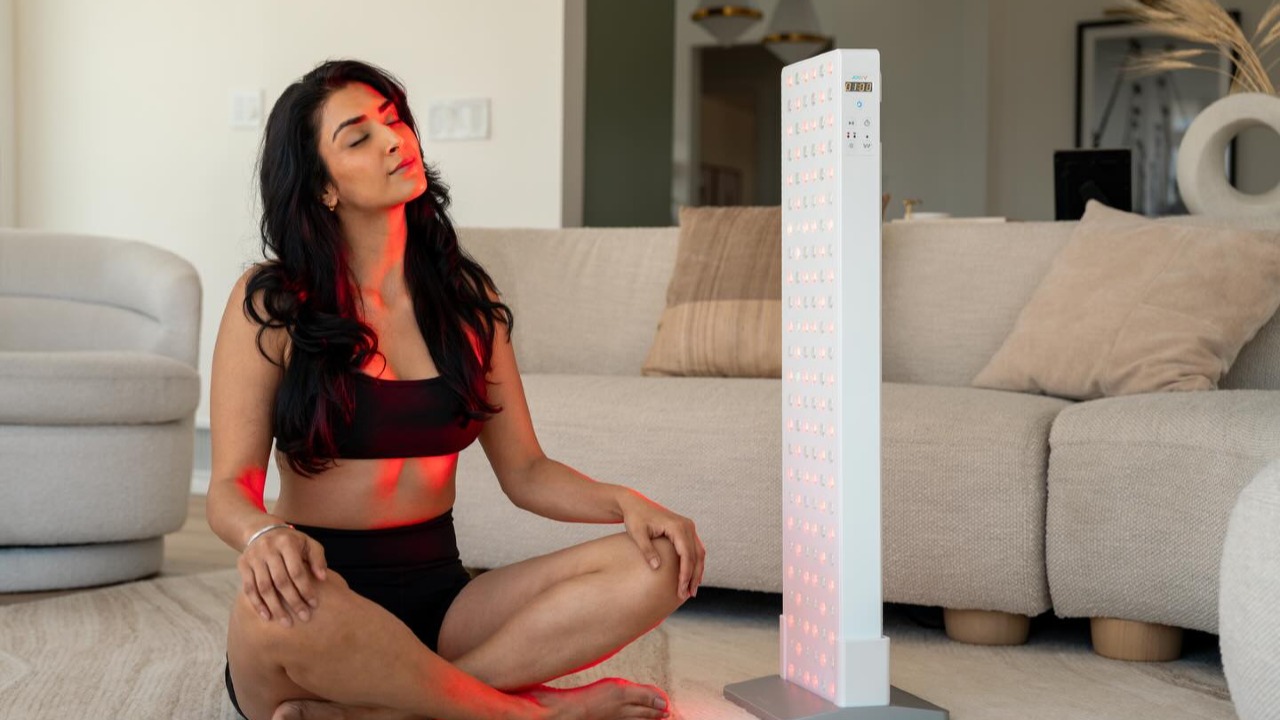
Red light therapy uses specific wavelengths of red and near-infrared light delivered to the body through LED panels or similar devices. In home environments, it is typically used while sitting or standing still in front of a panel for short, structured sessions.
Systems such as Mito Light panels or BlockBlueLight devices are commonly used in this category, ranging from compact personal setups to larger full-body configurations.
The key feature is not active engagement. You are not moving, stretching, or exerting effort during use. The system operates while the body is at rest.
This is part of why it is often explored in contexts like EDS, where reducing additional physical strain is an important consideration in daily decision-making.
What people are trying to support with it
Red light therapy is not a treatment for EDS, and it does not address the structural aspects of connective tissue disorders.
What people tend to explore it for is more indirect. It sits in the category of general recovery support, rather than condition-specific intervention.
In practice, that usually relates to three areas.
One is general physical recovery after daily strain. Not intense exertion, but the accumulation of small physical demands that can feel more noticeable in a body with joint instability or fluctuating tolerance.
Another is surface-level tissue comfort and general skin and soft tissue support, which some people include in broader routines focused on overall physical wellbeing.
The third is routine structure — creating short, low-effort recovery windows that do not require active physical participation.
None of these are specific to EDS, but they are often the types of inputs people explore when they are trying to reduce total physical load in a day.
Why passive systems matter in this context
One of the challenges with EDS is that many traditional recovery tools involve some level of physical demand.
Stretching, mobility work, and certain forms of exercise can be useful, but they are not always well tolerated on every day. Some days the body responds normally. Other days the same input feels like too much.
This variability is where passive systems become relevant.
Red light therapy sits in a different category because it does not require movement or exertion during use. The body is at rest while the session is happening.
That does not make it more effective in a direct sense, but it does make it easier to include consistently without adding additional strain to an already variable system.
What realistic expectations look like
One of the most important parts of using any passive recovery tool in a condition like EDS is understanding what it can and cannot change.
Red light therapy does not restructure connective tissue. It does not stabilise joints. It does not replace medical or physical management strategies.
What it can offer, in real-world use, is a low-interference recovery input that some people include as part of a broader routine focused on general physical support.
The effects, when noticed, tend to be subtle and gradual rather than immediate or clearly defined in a single session.
Because of that, it tends to sit in the background of a routine rather than standing out as a primary intervention.
How it is typically used at home
In home recovery setups, red light therapy is usually used in short sessions, often a few minutes at a time depending on the device and the area being targeted.
Panels like those from Mito Light or BlockBlueLight are often placed in a fixed position so they can be used without setup each time. That small detail matters more than it first appears, especially in routines where physical effort and decision fatigue need to be minimised.
The aim is not to create a complex process. It is to make the system easy enough that it can be repeated without adding friction to the day.
In practice, that often means using it at predictable points in the day — when transitioning between tasks, during periods of rest, or as part of an existing recovery window.
Where it sits alongside other recovery approaches
Red light therapy is often used alongside other passive recovery systems rather than replacing anything else.
In home environments, this can include cold exposure systems, infrared sauna blankets, or other low-effort recovery tools that operate while the body is not actively working.
The shared principle across these systems is not intensity, but accessibility. They are designed to be used without requiring active physical input during the session itself.
For people managing fluctuating physical tolerance, that distinction is often more important than any individual mechanism.
A note on context
Red light therapy is discussed here in a general informational context, based on how it is commonly used in home recovery environments.
It is not medical advice, and it is not intended to diagnose, treat, or replace professional healthcare guidance for Ehlers-Danlos syndrome or any other condition. Anyone considering changes to their health or recovery routine should consult a qualified healthcare professional who understands their individual situation.