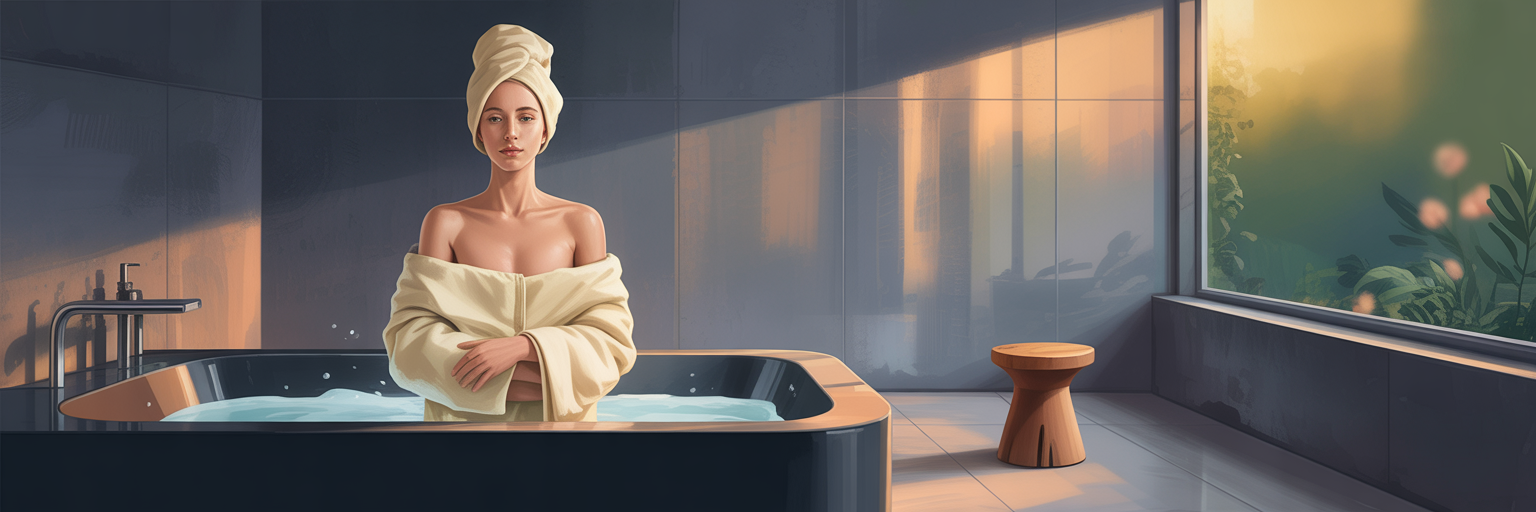
The Unlikely Connection Between Cold Exposure and Restful Sleep
The idea of a frigid dip before bed seems to defy the logic of cosy, warm sleep preparation. We are taught to associate comfort and rest with warmth, like a hot cup of tea or a thick blanket. Yet, a growing body of evidence suggests this counterintuitive practice is a powerful mechanism for regulating our internal clock and achieving deeper rest.
Interest in cold water immersion has expanded beyond the world of athletic recovery. It is now being recognised as a tool for enhancing overall well-being, with a particular focus on the relationship between cold exposure and sleep quality. The deliberate, controlled stress of a cold plunge triggers a cascade of physiological responses that can profoundly influence our ability to fall asleep and stay asleep.
This article explores the science behind using a cold plunge for sleep, provides a practical guide for incorporating it into your routine, and helps you optimise the practice for maximum rest and recovery. We will examine how it influences your body temperature and nervous system to create the ideal conditions for a restorative night. If you have struggled to quiet your mind and body for a full night's rest, could a brief, intentional chill be the missing piece of your sleep puzzle?
How Core Body Temperature Governs Your Sleep Cycle
Our bodies operate on a sophisticated internal clock known as the circadian rhythm, which governs our sleep-wake cycle. One of the most critical signals this clock uses to initiate sleep is a natural drop in core body temperature. As evening approaches, your body temperature begins to decline, signalling the brain that it is time to wind down. This temperature drop is directly linked to the release of melatonin, the hormone that regulates sleep.
A faster and more significant drop in core temperature can prompt a more robust release of melatonin, which can shorten the time it takes to fall asleep, a metric known as sleep onset latency. This is where a cold plunge becomes a strategic tool. By intentionally and rapidly lowering your skin and core temperature, you can amplify the body's natural sleep signals. We offer a range of cold plunge tubs designed to facilitate this process with precision and ease.
It is important to address a common misconception. The goal is not to feel cold while you are trying to sleep. In fact, that would be counterproductive. The magic lies in the thermoregulatory rebound effect. After you exit the cold water, your body works diligently to warm itself back up. This process involves sending warm blood from your core to your extremities, which paradoxically helps to lower your core temperature further, creating the perfect internal environment for falling asleep. You are essentially giving your body’s natural sleep-inducing mechanism a powerful head start.
The Autonomic Nervous System's Response to Cold
Beyond temperature regulation, a cold plunge has a profound effect on your autonomic nervous system (ANS). Think of the ANS as your body's internal control panel, with two main branches: the sympathetic system, which is your 'fight or flight' accelerator, and the parasympathetic system, your 'rest and digest' brake. A healthy balance between these two is essential for both daytime performance and nighttime recovery.
The initial shock of immersing yourself in cold water is a powerful activator of the sympathetic nervous system. Your heart rate increases, your breathing quickens, and your body releases alertness-inducing hormones like norepinephrine. This is the 'fight' response in action. While this might sound like the opposite of what you want before bed, it is only the first part of the story.
The most crucial part for sleep is what happens next: the parasympathetic rebound. After you get out of the cold, your body works to restore balance. It does this by strongly activating the parasympathetic system, which overcompensates for the initial sympathetic surge. This activation leads to a deep state of calm and relaxation. Your heart rate slows, your breathing deepens, and the production of stress hormones decreases. This state of parasympathetic dominance is precisely what your body needs to transition into a restorative sleep state. These are the core cold water therapy sleep benefits that users report, a feeling of profound tranquillity that quiets both body and mind.
A Practical Guide to Cold Plunging for Sleep
To harness the benefits of a cold plunge for sleep, your approach needs to be deliberate and consistent. It is not about enduring the coldest temperature for the longest time. Instead, it is about finding a protocol that triggers the desired physiological responses without creating excessive stress. Here is a practical guide to get you started.
Timing is Everything: The best time for cold plunge sessions aimed at improving sleep is 60 to 90 minutes before bed. This window allows the initial alerting effects of the sympathetic response to wear off, leaving you in the calm, relaxed state of the parasympathetic rebound just as you are getting ready to sleep.
Find the Right Temperature: Aim for a water temperature between 10–15°C (50–59°F). Extreme cold is not necessary and can be counterproductive, creating too much stress for your body to handle before bedtime. A system with precise temperature control, such as our Plunge All-In Cold Plunge System, makes it easy to find and maintain your ideal temperature.
Keep it Brief: A duration of 1 to 3 minutes is sufficient to initiate the thermoregulatory and nervous system benefits. Longer sessions are not better for sleep purposes and can increase cortisol levels, which you want to avoid in the evening.
Consistency Over Intensity: While a single session can be helpful, the most significant improvements in sleep quality and stress resilience come from regular practice. Aim for 3 to 5 sessions per week to allow your body to adapt and reinforce the positive changes.
| Parameter | Recommendation | Rationale |
|---|---|---|
| Timing Before Bed | 60–90 minutes | Allows initial sympathetic arousal to subside and the parasympathetic rebound to induce relaxation. |
| Water Temperature | 10–15°C (50–59°F) | Triggers the necessary thermoregulatory and nervous system responses without creating excessive physiological stress. |
| Duration | 1–3 minutes | Sufficient to initiate the benefits of cold exposure while minimising the risk of over-stressing the body. |
| Frequency | 3-5 times per week | Consistency reinforces the body's adaptive response, leading to more profound and stable improvements in sleep quality. |
This protocol is based on common findings in sleep science and user experiences. Individuals should start at the lower end of the duration and higher end of the temperature range and adjust based on personal tolerance and response.
Common Mistakes and How to Avoid Them

As you learn how to use an ice bath for sleep, you may encounter a few common pitfalls. Understanding these mistakes can help you troubleshoot your routine and ensure you are getting the relaxing benefits you seek. The most frequent complaint is feeling 'wired' or overly alert after an evening plunge, which almost always points to a correctable error in protocol.
Plunging Too Close to Bedtime: This is the number one reason for feeling alert instead of relaxed. The initial sympathetic surge needs time to dissipate. If you plunge and then immediately try to sleep, you are fighting against your own biology. Stick to the 60 to 90 minute buffer period.
Going Too Cold, Too Long: There is no award for enduring the most extreme conditions. Pushing your body with excessively cold water or for too long in the evening creates a significant stress response that can elevate cortisol and interfere with sleep. The goal is a controlled, therapeutic stimulus, not a survival test.
Ignoring Your Body's Signals: Everyone's tolerance for cold is different. It is critical to listen to your body. If you are shivering uncontrollably or feeling overly stressed, shorten your duration or increase the water temperature. Start conservatively and gradually adjust as you become more accustomed to the practice.
Neglecting the Post-Plunge Routine: What you do after the plunge is just as important as the plunge itself. Hopping out of the cold water and straight onto your phone or in front of a bright screen will counteract the calming parasympathetic effects. Instead, transition into a quiet, relaxing routine with dim lights, gentle stretching, or reading to support the wind-down process. Understanding how different modalities work is key, as we explored in our comparison of cold plunges and sauna blankets.
Integrating Cold Plunges into a Holistic Sleep Routine
A cold plunge is a remarkably effective tool, but it should be viewed as one powerful component of a comprehensive sleep strategy, not a standalone cure. Its benefits are magnified when combined with other established sleep hygiene habits. By creating a consistent evening ritual, you send powerful cues to your brain and body that it is time to prepare for rest.
Consider what a complete evening wellness routine could look like. About 90 minutes before bed, you take a 2-minute cold plunge. Afterwards, you dry off, change into comfortable clothes, and enjoy a warm, non-caffeinated herbal tea while reading a book in a dimly lit room. This combination supports the parasympathetic rebound from the plunge while also incorporating other sleep-friendly behaviours.
You can also create a synergistic effect by combining different recovery modalities. For example, using one of our infrared sauna blankets earlier in the day can promote relaxation, while a cold plunge in the evening helps regulate your temperature for sleep. By understanding the science and applying the correct protocols, you can transform the cold plunge from a simple recovery tool into a sophisticated method to improve sleep with cold plunge therapy and achieve consistently deep, restorative rest. For more insights into optimising your well-being, we invite you to explore the articles on our blog.